October 25, 2026

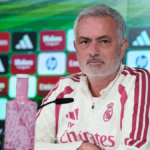
Portuguese coach Jose Mourinho returns this Sunday evening to the Camp Nou stadium to lead Real Madrid in its first Clásico match in 13 years. This return comes in the wake of the club’s decision last June to sign him with a contract extending until 2029, after the team’s coffers were devoid of any major title for two consecutive seasons, in favor of traditional rival Barcelona, which won the Spanish League title.
The contract with Mourinho came at the end of a year that witnessed widespread administrative and technical turmoil. Spanish coach Xabi Alonso was dismissed last January after only six months in charge, followed by the departure of his successor, Alvaro Arbeloa. Mourinho’s return was accompanied by the re-election of club president Florentino Perez, who received about 65% of the votes. Real Madrid paid 15 million euros to the Portuguese club Benfica to terminate the contract of Mourinho, who was dismissed from coaching Fenerbahce in August 2025. These data raise fundamental questions about a club the size of Real Madrid resorting to a coach whose career has recently declined, in light of indications that confirm that the management’s priority is to control the locker room and curb the influence of the stars at the expense of building a long-term artistic project.
The memory of Mourinho’s previous confrontations with Barcelona carries mixed results. Perez brought him in in 2010 to break the dominance of the Catalan team led by Pep Guardiola. He suffered a severe loss in his first Clásico at Camp Nou by five clean goals, before he compensated for that by winning the King’s Cup in 2011. He then won the league title the following season with a record score of 100 points, including a win at Camp Nou. However, that first term ended with sharp divisions within the locker room that cast a shadow over the Spanish national team at the time.
On the technical level, the current season’s numbers show a team different from the defensive style for which Mourinho has historically been known. Real Madrid scored 12 goals in its last three matches against Roma, Seville, and Leipzig, but in return it conceded three own goals in the Italian capital, and suffered two defeats outside its home base against two teams in the top four, Real Betis and Atletico Madrid, to occupy third place with 21 points, six points behind leaders Barcelona.
The complexities of the task multiply in light of influential absences, most notably the Brazilian star Vinicius Junior, who was suspended for four league matches after he was expelled for pulling the hair of a Villarreal player, after the club’s appeal was rejected, in addition to his compatriot Rodrigo, who is absent due to an anterior cruciate ligament injury, which places an additional burden on Kylian Mbappe and the Englishman Jude Bellingham.
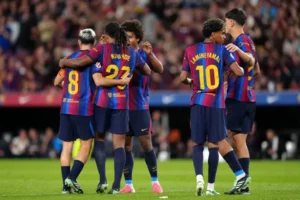
Despite this, the conditions seem theoretically appropriate for Mourinho’s philosophy, in light of the suffering of Barcelona’s defense and its reliance on an advanced defensive line that leaves vast spaces behind it, which are the gaps that the Portuguese coach has always used to achieve his most prominent victories. If Mourinho succeeds in exploiting these data and snatching victory, he will reduce the difference to three points, which early reinforces the correctness of the decision to bring him back, while a loss will widen the difference to nine points, raising questions about the feasibility of betting on the past.