October 2, 2026

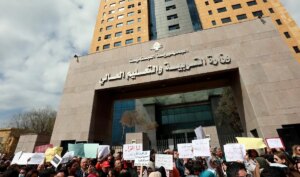
Official institutions in Lebanon continue to face escalating structural crises, led by the Lebanese University, which is supposed to represent a model of academics, integrity, and equal opportunities. As the term of the current university president, Bassam Badran, approaches on October 12, governmental tendencies are emerging towards extending his term, amid criticism that indicates the subjection of the academic edifice to the logic of sectarian quotas and legal transgressions at the expense of the interest of students.
In the university presidency file, the data indicate a clear disregard by the Ministry of Education and the government for explicit legal violations, especially Law No. 66/2009 and the decisions of the Constitutional Council. The current university president nominated himself, topping the list of five names submitted to the Ministry of Education, in what was described as a scandalous conflict of interest and a violation of the principle of equality by combining the qualities of opponent and arbitrator.
For her part, the Minister of Education, Rima Karami, contented herself with a verbal objection to the list’s inclusion of names suspected of a conflict of interest, without using her exceptional powers in accordance with Legislative Decree No. 49 of 1959 to nominate worthy candidates, submitting the list as it is to the Council of Ministers. There was also a refusal to announce the names of the 13 candidates, in a move that violated the principle of publicity, transparency, and academic norms, and aimed, according to opponents, to withhold the names of the Shiite candidates in order to block the way to their appointment.
On the administrative level, Badran managed the university in the absence of the University Council, and his appointments witnessed an exclusionary trend and an absence of sectarian balance, especially in the files of full-time professors and the selection of deans. The assignment approach in appointing deans and directors continued, despite the issuance of explicit decisions by the State Shura Council, most notably Resolution No. 235/2025-2026, which considered these appointments invalid, in violation of the law, and in violation of the authority’s exceptional powers. Despite this, neither the university presidency nor the Ministry of Education committed to implementing the judicial decisions, amid accusations that the government is dealing with the university as an institution affiliated with a specific sect and not as an official public administration.
In addition, Badran’s era witnessed repeated suspicions and scandals, which included suspicions of falsifying exam results and scandals that required the intervention of the State Security Service, leading to arrests and referrals to the criminal judiciary in a precedent in the university’s history. The most recent of these files were reports that talked about tampering with the results of the College of Medicine exams in favor of accepting the university president’s daughter into one of the specialties.
The continued political and governmental coverage of these practices raises major question marks about the seriousness of reform discourses and the rule of law, at a time when academic circles warn that the continuation of this administration undermines any chances of obtaining international support, while emphasizing that the reform of the Lebanese University begins with adherence to applicable laws and judicial rulings and stopping the quota policy.