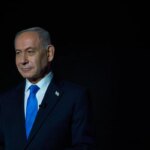
An investigation published by the New York Times revealed that the Israeli Prime Minister, Benjamin Netanyahu, received a direct warning from the Emirati President, Sheikh Mohammed bin Zayed Al Nahyan, in late September 2023, regarding the Hamas movement’s intention to launch a major attack, a warning that the leaders of the Israeli security services were not informed of.
The journalistic investigation was prepared by Adam Rasgon, Mark Mazzetti, and Ronen Bergman, and the newspaper relied on two sources: one of them confirmed that he had spoken with the Emirati president, and the other had seen the content of the call. One of the sources indicated that the information did not specify the nature of the attack, whether it was a missile attack or a ground incursion. It was also not clear whether the original sources of that information or whether the communication touched on other files.
According to five former senior Israeli officials, the Emirati warning was not conveyed to the heads of the security establishment. The minutes of a meeting Netanyahu held with these leaders on October 1, 2023, reviewed by the newspaper, confirmed that the discussion was completely devoid of any mention of this warning. Instead, Netanyahu stressed the need to maintain calm in the Gaza Strip, rejecting proposals to launch strikes against Hamas leaders inside the Strip who were involved in supervising attacks against Israelis in the West Bank.
The minutes of the meeting indicated that Netanyahu justified his position by saying that any military movement in Gaza might undermine efforts to normalize diplomatic relations with Saudi Arabia, which he believed were in advanced stages. A few days later, Hamas and other factions carried out the October 7th attack, which killed about 1,200 people and took about 250 hostages, according to the numbers contained in the report.
Earlier this month, Haaretz newspaper referred to the same Emirati warning. On the other hand, Netanyahu’s office denied receiving any warning call from Sheikh Mohammed bin Zayed, stressing that any potential Emirati intelligence information was supposed to pass through official intelligence channels. Both Netanyahu’s office and the UAE Ministry of Foreign Affairs did not comply with New York Times requests to comment on what was stated in the investigation.
In a later development, the investigation revealed that the Emirati president spoke, months after the attack, with the director of the US Central Intelligence Agency (CIA), William Burns, about his contact with Netanyahu in September 2023. According to a person familiar with the discussion, bin Zayed informed the American official that he had warned Netanyahu of an imminent threat of violence by “Hamas” whether in the West Bank or Gaza, noting that the investigation did not confirm whether the American side had received this warning before the attack or whether Netanyahu had Hide it from him.
Former Israeli officials confirmed that the Emirati contact was not included in the internal investigations conducted by the army, intelligence agencies, and others to determine the failures of October 7th. The newspaper includes this incident among a long series of warnings that the Israeli security establishment downplayed, most notably the army’s receipt in 2022 of a Hamas combat plan bearing the name “Jericho Wall,” which later turned out to be consistent with the course of the actual attack.
These data are taking on extremely sensitive political dimensions as the date of the first general elections in Israel approaches since the October 7 attack. At a time when Netanyahu, who is aspiring for a seventh term, seeks to place responsibility on the shoulders of the leaders of the security services, his opponents demand that he bear full responsibility for the failure, and call for the formation of an official investigation committee, while the central question raised by the “New York Times” investigation remains: Why was the Emirati warning absent from the security discussion tables in the days between the call and the attack?