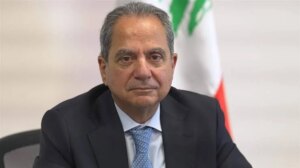
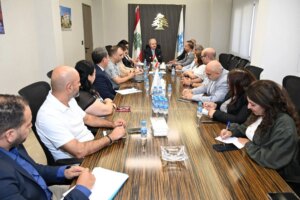
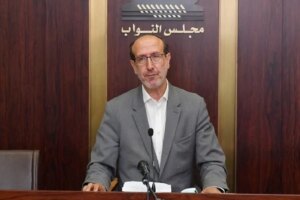
The head of the Baalbek-Hermel parliamentary bloc and a member of the “Loyalty to the Resistance” bloc, Representative Hussein Haj Hassan, saw that Lebanon and the region are facing major changes in light of rapid regional transformations, considering that the current developments fall within the framework of a broader confrontation with what he described as “American hegemony and Israeli invasion.”
Hajj Hassan’s statements came during a tribute ceremony held by Hezbollah at the Imam al-Sadiq Complex in the “Five Wings” area, in commemoration of the martyrs Fouad Shafiq Khazal Khanafer, Jihad Shafiq Khazal Khanafer, and Hassan Youssef Abdel Sater, in the presence of a crowd of scholars, figures, families of the martyrs, and families.
The MP responded to the accusations directed at his party of “being empowered abroad,” considering that the party that is being empowered abroad is “the one who is empowered by the American and taking advantage of the Israeli,” noting that Israel is targeting Lebanon with the support and arming of the Americans. On the other hand, he pointed out that Iran calls on the Lebanese authority to benefit from the regional climate and any possible agreement with Washington that might lead to Israel’s withdrawal from Lebanon and a ceasefire.
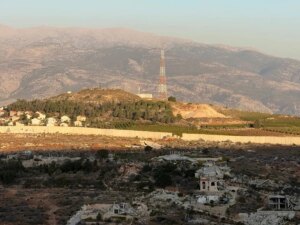
Regarding the regional issue, Hajj Hassan linked his positions to developments on the ground in Syria, citing the announcement of the Israeli Defense Minister, Yisrael Katz, on September 23 regarding Israel’s commitment not to withdraw from Mount Hermon and the security zone inside Syrian territory, in addition to its firm position on the Golan. On the other hand, Damascus adheres to the necessity of the withdrawal of Israeli forces and a return to the arrangements of the 1974 Disengagement Agreement.
On the internal level, Hajj Hassan wondered about the position of those demanding the abandonment of “elements of Lebanon’s power,” considering that relying on Washington constitutes a “big mistake,” and that the negotiating path sponsored by the United States between Lebanon and Israel did not achieve the desired results. Some Lebanese forces called for “a return to the concept of true sovereignty, national unity, and convergence,” and not to rely on the American side, in addition to opening the door to understanding with the resistance.
Regarding the social file and reconstruction, Hajj Hassan asked the government and the authority about what they had provided since the last war regarding the issue of the displaced, the reconstruction of the affected areas, sheltering the people, and the restoration of homes, as well as supporting the families of the martyrs, the wounded, and the prisoners. He stressed that asking these questions comes “from a position of accountability, not attack,” adding that whoever wants to represent all the Lebanese must start with “the people of the resistance, its people, and its environment” through practical steps in shelter, restoration, and reconstruction, not with speeches and slogans alone.
These positions come at a time when the Lebanese interior is witnessing a heated debate about the state’s approach to the issues of weapons, sovereignty, and reconstruction, in parallel with the continuing tension on the southern front and the political movement related to the implementation of security arrangements and the cessation of hostilities.