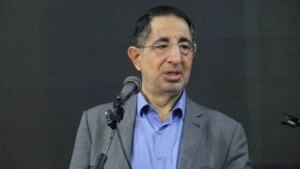
Writer and political analyst Sarkis Abu Zeid confirmed, in an interview with the “Lebanon Debate” website, that the main issue currently raised at the Lebanese and international levels relates to who will fill the vacuum in the south after the expiration of the UNIFIL deadline, pointing to the absence of any clear agreement regarding this issue.
Abu Zeid explained that UNIFIL forces played an important role in ensuring an international presence in a sensitive area, but their effectiveness remained limited, especially after they were exposed to several Israeli attacks during which a number of their soldiers were injured without condemnations or decisive measures, which made them unable to protect Lebanon’s international borders. He pointed out that the discussion is not limited to the extension only, but extends to include the nature of tasks and powers, warning against proposals that require amending its role to include the Lebanese-Syrian border or granting it broad powers to interfere in internal affairs and control weapons. He also touched on the proposal for the participation of Arab forces to provide cover and additional support, stressing that this option has not been decided yet.
Abu Zeid warned of the “most sensitive aspect” of the possibility of internationalizing the crisis and placing Lebanon under international guardianship through Chapter Seven due to the blockage of options, pointing out that there are local and international parties that encourage this proposal while other parties reject it. He explained that the President of the Republic and the Prime Minister are seeking to find formulas that prevent a security and political vacuum in the south, but the results have not yet become clear in light of continued communications.
In reading the Lebanese-American communications, Abu Zeid saw that the messages directed to Lebanon focus on the resistance weapons file, considering that the American style of dealing with the Prime Minister, compared to the President of the Republic, who received positive messages from US President Donald Trump, reflects Washington’s desire to push the Lebanese state towards arms control in order to reach the resistance weapons, which – from his point of view – reflects the United States’ dealings according to its political interests and calculations, not permanent friendship, criticizing the inconsistency of some practices with the level of historical relations between the two countries.
Abu Zeid pointed out that the final solutions to the pending files will not be close, and it is likely that the picture will become clearer after the results of the American and Israeli elections become clear, describing the current stage as a stage of transition and waiting during which the parties are trying to improve their positions.
In response to a question about the possibility of a large-scale war breaking out before the elections, Abu Zeid ruled out the occurrence of a major confrontation, while keeping all possibilities open, explaining that the results of a large-scale war are not guaranteed and involve unaccounted factors and surprises, in addition to the positions of major international powers such as Russia, China, and North Korea, and the risks of nuclear escalation that may accompany it, which keep the decision of war from being a simple option for any party.
In the regional context, Abu Zeid pointed to the circulation of information about the development of Iranian nuclear capabilities – with possible support from Korea, China and Russia – considering that Tehran may use these capabilities for defensive, not offensive, purposes, which increases the complexity of any decision to launch a large-scale war against it. He added that there are countries that reject the United States’ efforts to impose new hegemony or unilateralism on the international system, regardless of their position on Iran.
Abu Zeid concluded by emphasizing that the region is going through a delicate transitional phase, which involves waiting to know the trends of political and military developments, suggesting that a large-scale war will not break out, while emphasizing that all possibilities remain possible depending on internal developments in Israel and the United States.