Lebanon is witnessing an escalating living crisis due to the continuing record rise in fuel prices, amid the expansion of the affected sectors and the absence of serious reforms, which has led to a continuous erosion in the purchasing power of the majority of citizens.
Fuel prices recorded a new jump, as a can of gasoline (95 and 98 octane) rose by 24 thousand liras, diesel by 55 thousand liras, and a bottle of gas by 28 thousand liras. Accordingly, the new prices were set as follows: 95 octane gasoline at 2,834,000 liras, 98 octane gasoline at 2,852,000 liras, diesel at 2,823,000 liras, and a gas bottle at 1,249,000 liras.
In light of these developments, trade union and sector bodies moved to put pressure on the government. In this context, the Chairman of the Board of Directors of the National Social Security Fund, Bechara Al-Asmar, after his meeting with President Joseph Aoun, revealed his demand for the formation of a ministerial economic cell to monitor living pressures, speed up the convening of the indicator committee, and increase the transportation allowance. Al-Asmar indicated that President Aoun responded to these demands, awaiting the return of Prime Minister Nawaf Salam from abroad to begin practical steps.
In turn, the head of the land transport sector federations and syndicates, Bassam Tlais, issued a strong warning to the government, noting that the price of a can of gasoline reached $32. Tlais called for the immediate implementation of the agreed-upon procedures and the payment of compensation owed to drivers, warning that the sector will make its decision regarding the upcoming escalatory steps amid the impatience of workers in the sector as a result of broken promises.
In parallel, the General Labor Union called on its executive council to meet next Saturday at the union’s headquarters, to recommend escalatory steps that include a warning strike, in an indication of the possibility of union movements expanding in the coming days if the government does not take the initiative to address the crisis.
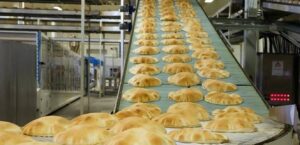
The crisis was not limited to the transportation sector, as the head of the Farmers’ Union, Ibrahim Tarshishi, warned of the serious repercussions of the rise in diesel prices on farmers and the productive sectors, considering that the way the fuel market is managed locally doubles the burdens on citizens and producers. For its part, the Federation of Bakeries and Bakeries Unions warned that the continued rise in the prices of wheat, flour, and diesel puts the bakeries sector and citizens, especially the popular groups, in front of an extremely dangerous stage. The Union called on the government to declare a state of economic and social emergency, expand the social safety net, and pay the cost of bread for the most needy families through a transparent mechanism.
In the educational sector, the Teachers Union announced that it is continuing its contacts with the General Secretariat of Catholic Schools and the Union of Educational Institutions to increase the transportation allowance in proportion to the significant increase in the cost of living, especially since the price of a can of gasoline doubled compared to last year while the transportation allowance remained the same. The union demanded that the transportation allowance be doubled and called on the Minister of Finance to take urgent practical steps, reserving its right to call for union action if its demands were not met.
The Lebanese street remains awaiting the return of the Prime Minister from New York and the resumption of the Council of Ministers sessions, amid anticipation of what will result in the coming days, and whether the government will succeed in curbing prices and supporting the living capacity of citizens, or whether the crisis will head towards a new wave of open unrest.