The Wall Street Journal, citing American and regional officials, revealed a remarkable shift in Iranian attacks during the current war. It has become more complex with the adoption of multiple types of missiles, various trajectories and maneuvers, and new warheads that divide into several projectiles as they approach their targets, which imposes additional challenges on interception operations. An official confirmed that Iran was able, during an attack that took place last week, to target fighter aircraft and another at the “Muwafaq Salti” air base in Jordan.
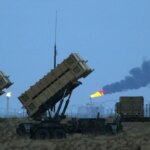
As part of confronting these threats, the US military launched up to 70 or more advanced interceptor missiles during a single Iranian missile attack last week. The officials explained that the American forces used between 60 and 70 Patriot missiles to confront an attack that included about 20 ballistic missiles, in addition to launching more than 12 interceptor missiles from the THAAD system, a consumption approximately equivalent to what the American forces consumed during an entire week in other stages of the war.
Statistics reported by officials indicate that since the beginning of the war, Iran has launched more than 1,500 ballistic missiles and 6,000 large drones, while American air defense units were able to destroy thousands of Iranian projectiles to protect military bases, energy infrastructure, and residential areas.
On the other hand, reports of a decline in the stock of precision munitions were met with categorical denials from the Pentagon. US Department of Defense spokesman Sean Parnell described the news as “completely false,” stressing that the US Army remains “the strongest and most efficient fighting force in the world,” and warned that circulating such reports might encourage opponents to provoke or attack US forces. In the context of efforts to enhance the stockpile, an official revealed that Washington has resorted to refurbishing some old “Tomahawk” missiles.
This report comes amid growing concerns about the depletion of US air defense munitions. Former Arab and American officials warned that imposing additional economic sanctions on Tehran could prompt it to respond militarily by targeting infrastructure, which would impose more severe pressure on the US stockpile of interceptor missiles.