Ali Mentash – Lebanon 24
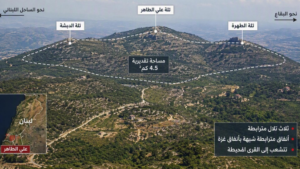
It has become clear, after the Israeli withdrawal from Ali Al-Taher Hill and from the towns of Kafr Tibnit, Nabatieh Al-Fawqa, and a number of adjacent areas, that what happened during the past days cannot be read as a mere military movement separate from the political track. Developments on the ground suggest that an understanding or settlement had begun to take shape before the Israeli entry into some points around Ali al-Tahir, and that the chapters of this settlement are gradually appearing today on the ground.
The most notable thing that can be observed is the retreat of the Israeli forces from a large area they had entered, in exchange for the deployment of the army in a number of areas from which they withdrew. It seems that the general path is heading towards redrawing the deployment lines all the way to the borders of the Litani River, resembling an unannounced disengagement process, which may be a prelude to a phase completely different from the one the south witnessed during the past period.
But what is noteworthy is that the ground withdrawal was not accompanied by the cessation of Israeli military movement in the air. On the contrary, raids and targeting continued, specifically in Nabatieh Al-Fawqa, Ali Al-Taher, Kafr Benit and its surroundings. This may mean that the understanding, if it actually exists, does not include stopping the freedom of Israeli air movement in this spot, which makes the return of civilians to it extremely difficult at the present time.
In other words, we may be facing a formula based on the withdrawal of Israeli ground forces in exchange for Israel’s continued ability to carry out air strikes when it considers that there is a target that requires it. This formula, of course, does not mean a complete end to the war, but it may mean freezing the broad ground confrontation and resetting the rules of engagement.
The main question here: Why could Israel accept this scenario after it had expanded its reach?
The first reason may be military. The Israeli deployment over a wide area of southern Lebanon requires large forces and long supply lines, and makes the deployed units more vulnerable to targeting in the event of a return to open confrontation. Therefore, the Israeli leadership may see that maintaining limited points and freedom of air movement is less expensive than spreading Wild Wide, difficult to install and protect for a long time.
The second reason is political and regional. Israel realizes that the possibility of reaching an American-Iranian understanding during the next stage remains, and that any broad regional settlement may ultimately force it to withdraw from the vast majority of Lebanese territory. Therefore, it may be in its interest to implement this withdrawal gradually and within an agreed upon path, rather than being forced to do so later under the pressure of a settlement, which may allow its opponents to present it as an Israeli retreat or defeat.
Hence, current indicators do not suggest that the Israeli army is preparing for a new round of ground advances in the near term. On the contrary, a site stabilization and propagation rearrangement phase appears to be the most likely.
If this path continues, talk of a new Israeli advance towards Iqlim al-Tuffah or additional areas deep inside Lebanon becomes less likely, unless the existing understandings are dropped and major regional escalation returns. Only then can the calculations change again, and the front return to square one.