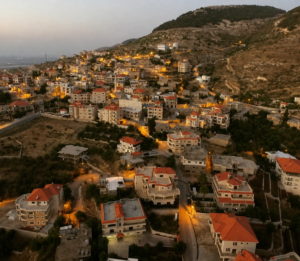
The National Litani River Authority began removing encroachments and new occupations on public river property in the town of Sir al-Gharbiya in the Nabatieh district, in a step that included existing violations in the “Al-Diaa Rest House,” as part of an ongoing campaign to protect the river’s course, restore public property, and prevent the establishment of illegal facilities on its banks.
The Authority announced that it had begun removing the new occupancies in the area, stressing that the procedures are not limited to removing the existing violation, but rather include preventing any attempt to re-establish it or expand other encroachments within the scope of the river properties.
The Authority warned violators that any new infringements will be met with legal procedures, including prosecution before the competent court and a request to record an infringement sign on the real estate newspaper for the properties in question, in a way that officially proves the existence of the violation and holds the owners accountable for direct legal consequences.
It also confirmed that the removal of the violating facilities will be done at the expense of the violators themselves, while bearing the full financial and legal burdens resulting from the violation and the operations to remove them.
The Authority stressed that its teams will continue detection, monitoring and removal work in Sir al-Gharbiyya and other areas of the lower basin of the Litani River, without exception, within the framework of a policy aimed at preventing the conversion of the river banks and public water properties into private spaces or unlicensed investment sites.
The operation in Sir al-Gharbiyya is of particular importance due to the town’s location in direct proximity to the Litani Stream, as it is located in the Nabatieh district and is bordered by the river on more than one side, which makes the protection of river properties there directly linked to preserving the stream and preventing its restrictions or the establishment of facilities that may affect the surrounding environment.
The step does not come in isolation from a broader campaign carried out by the authority in recent months to remove encroachments on public river property. Last July 10, it was announced that encroachments erected during the war period near Property No. 97 in the Al-Jazeera Real Estate area would be removed, upon a signal from the Public Prosecution of Appeal in the South and with security support, after filing a judicial complaint against the trespasser.
The Authority confirmed at the time that its policy is based on preventing any illegal occupancy or investment in riverine public property, and not just treating pollution, given that construction and occupancy on the banks of the river could affect the safety of the stream, water facilities and resources associated with it.
The procedures also expanded during July to include the removal of illegal settlements and camps on the banks of the river. On July 27, the Authority, in coordination with the security services and concerned departments and based on a judicial signal, began removing one of the camps within the towns of Mansoura and Gaza, and linked these measures to combating encroachments and sources of pollution at the same time.
In parallel, the Ministry of the Interior and Municipalities entered directly into the line of protecting riverbeds, after Minister Ahmed Al-Hajjar sent a letter on July 22 to the governors, especially in the governorates of Baalbek-Hermel, Bekaa, South Lebanon, and Nabatieh, in which he demanded that the department’s instructions be circulated to the governors, municipalities, and municipal unions, and to prevent any work within the riverbeds and public water properties outside of legal procedures.
The Interior Ministry’s move came in response to a letter that the National Authority for the Litani River had sent on July 6, which reflects the transition of the violations file from procedures implemented by the Authority alone to a path in which the administrative, local, judicial, and security authorities participate.
The Authority’s data shows that the encroachment file is not limited to isolated individual violations, as its official correspondence indicates that it worked to remove encroachments on more than two million square meters of river property, in addition to more than 500 thousand square meters of expropriations belonging to it.
Data published on its website also indicate the removal of large numbers of encroachments in irrigation projects, the removal of sewage networks that flowed into the canals and polluted their water, in addition to the removal of 177 dams or obstacles from the river’s course, which reveals that attacks on the basin are not limited to construction, but rather include multiple forms of occupying the stream or changing its nature.
For years, the Authority has adopted a program that combines environmental monitoring, periodic inspection, and judicial and administrative action. Its mission includes following up on infringements and sources of pollution resulting from sewage, industry, waste, and agricultural activity, and taking action against violators in the upper and lower basins.
The issue of recording an infringement notice on the real estate newspaper, which the authority waved in the case of Sir al-Gharbiyya, gains practical importance because it makes the violation linked to the real estate registry itself, which increases the pressure on the property owner to settle his situation and remove the violation instead of keeping the violation in place for years.
Bearing the cost of removal on the trespasser also aims to prevent turning the process of restoring public property into a financial burden for the state, especially when the facilities were established illegally despite the clarity of the nature of the land or the boundaries of river public property.
These measures fall within the framework of an escalating campaign led by the Authority to protect the Litani River, combining pollution control, removing encroachments, and preventing the occupancy of public property, in cooperation with the judiciary, security services, municipalities, and official administrations. The Authority recently confirmed that this campaign will continue until the violations that affect river public property or lead to pollution of the river are removed.
The Sir al-Gharbiyya operation thus carries a message that goes beyond the “Al-Diyaa Rest House” itself, which is that the Authority is moving to pursue any new occupancy on the banks of the Litani, while using administrative, judicial, real estate, and financial tools at the same time, in an attempt to restore public property and prevent encroachments from being established as a fait accompli.