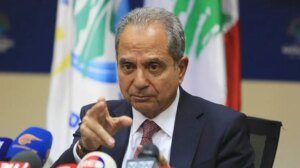
Representative Edgar Trabelsi attacked the way the Ministry of Education and Higher Education managed the file of the clinical exam within the colloquium exams, considering that the ministry’s announcement of its intention not to apply it to candidates for the first round of 2026 came after “confusion and confusion” and parliamentary and union objections, describing the step as “a tactical withdrawal to save face.”
Trabelsi wrote on the “X” platform: “After confusion and confusion, and after we raised a question to the government with our fellow representatives in the Strong Lebanon Bloc, and after the objection of the doctors’ unions in Beirut and Tripoli, the Ministry of Education announces its intention not to proceed with the clinical examination for colloquium candidates for the first session.”
He added: “A tactical withdrawal to save face!” It would have been better for a frank apology from the doctors for what they did to them,” he said, congratulating those who passed the written and oral exams.
At the same time, Trabelsi stressed that he does not oppose the principle of adopting the clinical examination, but rather supports its implementation in the future. He said: “We support conducting the clinical examination from now on,” thanking everyone who took action, as he put it, to do justice to the doctors concerned.
His position came after the General Directorate of Higher Education in the Ministry of Education announced, on Friday, its intention not to proceed with the clinical and practical exam that was scheduled for the first session of the colloquium examinations for the year 2026, and to begin implementing it as of the second session scheduled to be held during the coming November and December, pending the issuance of the necessary decision by the Minister of Education and Higher Education, Rima Karami.
The Directorate said that the new approach came after deliberations with the Ministry of Public Health and the Doctors’ Syndicates in Beirut and Tripoli, after consulting the head of the Cases Authority at the Ministry of Justice, and based on Karami’s approval.
On August 9, the Ministry defended the adoption of the clinical examination for general medicine students who passed the written and oral examinations, stressing that it is based on the third paragraph of Article 12 of the colloquium examination system contained in Decree No. 1527 issued in 1959.
But the objection, according to critics, was not focused on the principle of the clinical exam itself as much as it focused on the timing of its application to the first session students, after a number of them had completed the written and oral exams without the arrangements for the clinical exam being clear from the beginning of the session.
Trabelsi had raised the issue publicly on August 9, saying that the doctors came to take the colloquium exams and completed the written and oral exams without being informed in advance, according to him, of the clinical exam, noting that some of them had appointments to return abroad to work or complete their specialization. He confirmed that day that he supported the clinical examination, “but not in this way.”
The objection later developed into a parliamentary action, as Trabelsi announced on August 11 that he and his colleagues had raised the issue at the opening of the legislative session and submitted a question to Prime Minister Nawaf Salam, linking the delay in announcing colloquium results and linking them to a clinical exam to what he said was the harm caused to medical graduates who wish to pursue their specialty or join their work.
The Ministry of Education had preceded this by issuing Announcements No. 7022/11 and 7024/11 on July 30, related to organizing applied tests. Then, on August 3, Resolution No. 1110/M/2026 was issued to set the dates for the clinical exam in general medicine and the practical exam in pharmacy, before the path ended with the current trend of postponing the application to the second session.
This means that the latest decision does not cancel the clinical exam from the colloquium system permanently, but rather postpones the application of the new formula to candidates for the first session, with it becoming effective starting from the second session of the year 2026 if the final ministerial decision is issued in accordance with the rules.
Trabelsi did not limit his criticism to the colloquium file, as he called on the Ministry of Education to stop what he described as “randomness” in its decisions, demanding fair solutions for other files that include those with free applications, students of foreign curricula, transitional grades, and completion in public schools.
Trabelsi had also raised the file of free applications during his parliamentary move on August 11, accusing the ministry of neglecting to conduct exams for this category, in parallel with his objection to the mechanism for managing the collage file.
Thus, the Ministry’s current decision closes an essential part of the controversy related to first-year doctors, but it keeps the clinical exam file open before the second session, while awaiting the issuance of the official decision that determines the application mechanism and timing once and for all, at a time when the objectors are trying to establish a rule based on announcing any change in the conditions of the exams before the start of the session and not during it.