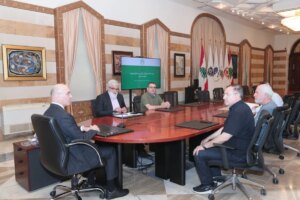
Today, Thursday, August 20, 2026, the Port of Beirut, in cooperation with the World Bank Group, launched a comprehensive study aimed at developing a strategic vision to enhance economic and urban integration between the port and its immediate surroundings, in a step that seeks to reorganize the relationship between one of the most prominent economic facilities in Lebanon and the urban fabric surrounding it.
The initiative, which is funded by the World Bank Group and provides technical support with local and international expertise, includes a series of specialized workshops that will address various aspects related to the port and its surroundings, with the process culminating in the presentation of the results and recommendations in a final workshop, in preparation for developing a practical vision about the most appropriate formula for this relationship.
In a speech during the launch of the study, Chairman of the Board of Directors and Director General of the Port of Beirut, Marawan Al-Nafi, confirmed that the port administration has, since assuming its duties, placed the issue of integration with the surroundings among its priorities, stressing the importance of building a smooth relationship that allows for enhancing economic interaction between the port and the city, without affecting the port’s ability to perform its basic functions.
Al-Nafy pointed out that the Port of Beirut is distinguished by its presence within the urban fabric of the capital, similar to a number of major ports around the world that grew up inside or adjacent to cities, and over the decades have turned into an essential part of its economic and urban identity.
He explained that ports have historically played a pivotal role in the growth of cities and the expansion of their commercial and economic activities, but the development of cities, the expansion of their residential areas, and the change in their functions imposed, in later stages, the need to reorganize the relationship between port activity and its urban surroundings, in a way that ensures reconciliation between the requirements of trade, transportation, and logistical services on the one hand, and the needs of the city and its residents on the other hand.
Al-Nafi said that the port of Beirut and the city do not work in isolation from each other, and that the goal is to reach a formula that ensures that Beirut benefits from the presence of the port, in parallel with enabling the port to continue its economic and development role.
He stressed that the port administration has been committed from day one to working to achieve this integration, making the port a source of pride for the capital and its people, and at the same time establishing a more streamlined and organized relationship between the facility and its surroundings.
Al-Nafy announced that the World Bank will finance the study on this issue, with the aim of arriving at a practical vision that can be built upon to achieve the desired integration, and arriving at the best possible formula that serves the port, the city, and the public interest, thanking the World Bank Group for its support and trust.
For his part, Director of the World Bank Group Office in Lebanon, Enrique Blanco Armas, confirmed that the launch of this study comes at an appropriate time, in parallel with the strategic vision launched by the Port of Beirut.
He pointed out that the importance of the port is not measured only by its area or the volume of its activity, but also by the job opportunities, services, and economic activity it generates in the surrounding areas, stressing the readiness of the World Bank Group to provide the necessary support and technical assistance in this context.

The study gains additional importance in view of the position that the Port of Beirut occupies in the Lebanese economic cycle, as it historically constitutes one of the main gateways to foreign trade and import and export movement, in addition to its activity being linked to a wide range of sectors, from shipping, land transport, and customs clearance to warehousing, logistics services, and trade.
The World Bank had considered, in previous studies on the ports sector in Lebanon, that the development of Beirut Port should not be limited to rehabilitating its infrastructure, but rather it should be part of an integrated national vision for the ports, transport and trade sector, which includes improving management and customs operations, digitization and long-term planning. He also stressed that the port’s location and its relationship with the economic activity surrounding it form part of any sustainable vision for its development.
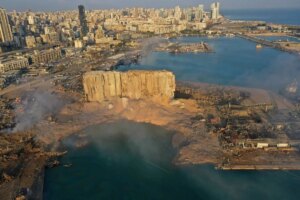
The issue of reorganizing and developing the port of Beirut has continuously returned to the forefront since the explosion of August 4, 2020, which caused extensive damage to the port and its surrounding neighborhoods. The rapid assessment study of damages and needs, which was prepared in cooperation between the World Bank, the United Nations, and the European Union after the explosion, estimated the damage to the port at about $350 million, while the reconstruction file has also become linked to questions related to how to build a more efficient, safe, and integrated port into its surroundings.

Following the explosion, the World Bank, the European Union and the United Nations launched the Reform, Recovery and Reconstruction Framework, which established a set of principles for the recovery process, most notably transparency, accountability and inclusion. The “Lebanon Financing Facility” was also established to support recovery programs and preparation for reconstruction, including work related to reforming the port sector and rebuilding the port of Beirut on more sustainable foundations.
The World Bank has previously proposed a set of pillars to modernize the Lebanese port sector, including setting a national vision for the sector, developing the governance model, modernizing customs, border and commercial procedures, adopting transparent processes in selecting operators and investors, in addition to developing the infrastructure within an integrated master plan for the port of Beirut.
The new study opens an additional file within this path, which is the relationship between the port and the city itself, as the issue does not stop at the docks, stations, and marine facilities, but rather extends to the road network, truck traffic, services, commercial areas, surrounding neighborhoods, job opportunities, and economic activity generated by the port.
It is expected that the planned workshops, with the participation of local and international experiences, will allow identifying the needs, challenges and opportunities available to the port of Beirut and its surroundings, leading to a vision that can form the basis for organizing the future relationship between the port and the capital, so that the port remains able to exercise its role as an essential commercial gateway to Lebanon, while the city benefits more from the economic activity, services and opportunities associated with its presence.