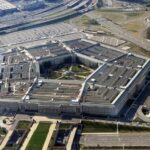
The significant damage to American bases in the Middle East during the war opens the door to redrawing the United States military presence in the region, amid a study within the Pentagon to reduce forces in the Gulf and transfer part of them to other locations, including Israel. However, this option collided with disagreement within Washington due to fears of what was described as “Israeli espionage.”
According to a report by journalist Lior Ben Ari on the Israeli “Ynet” website, based on what was published by the “Washington Post” newspaper, the Pentagon is re-evaluating the size of the American military deployment in the Middle East, while reducing the forces present in the Gulf region constitutes one of the most prominent issues on the table for discussion.
The American newspaper’s report was based on 8 officials and sources described as familiar with the details, and indicated that American bases in the region had been subjected to Iranian attacks over a period of months.
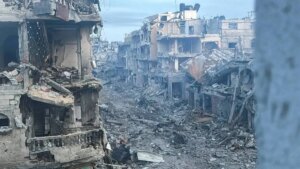
According to the report, the extent of the damage to these facilities created what officials described as a “once in a generation opportunity” to reassess the American military presence in the Middle East, while the Pentagon has already given indications that it may not rebuild the bases in the way they were before the confrontation.
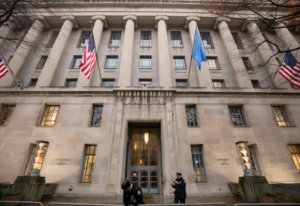
A senior Pentagon official said that the Joint Chiefs of Staff and the US Central Command (Centcom) are studying the file.
He explained that US Defense Secretary Pete Hegseth has not yet issued an order to conduct a formal review of the deployment of forces, but he described the ongoing work as “cautious planning,” which may later help the administration determine whether and how it will rebuild the bases that were damaged in the war.
On the other hand, more hardline parties in Washington tried to influence the Pentagon’s planning, by presenting the option of transferring part of the American forces to Israel.
The report cited a study published in March by the “JINSA” Institute, or the Jewish Institute for National Security in America, a pro-Israel organization, in which it called for the transfer of more American military assets to the Uvda base.
But the administration of President Donald Trump is witnessing disagreement over this proposal due to fears of what the report described as “Israeli espionage.”
About two months ago, NBC revealed a secret document issued by the Pentagon’s military intelligence service, which concluded that Israel’s efforts to monitor American officials exceeded the usual limits, against the backdrop of fears of being completely excluded from the talks between Trump and Iran.
Washington and Israel then denied what was contained in the report.
One of the sources told the American network at the time that Israel’s ability to carry out human espionage operations and collect technological intelligence information had reached a “critical level.”
He added that the document indicated that a number of specific incidents had been monitored that raised concerns within the United States.
In a simultaneous development, the UAE had previously issued warnings due to what it described as a “missile threat” towards it, while sirens sounded in Dubai for the first time in about a month and a half.
The National Emergency, Crisis and Disaster Management Authority in the UAE called on residents to remain in safe places and follow instructions through official channels.
About half an hour after warnings were issued to residents, the UAE Ministry of Interior announced that “the situation is safe.”
In the same context, US President Donald Trump had previously published, via his “Truth Social” platform, an “annexation map” for the Strait of Hormuz, after he had threatened to declare the strategic sea lane American territory.
Trump later wrote: “No talks with Iran, no talks planned. Naval blockade remains in full force. Strait of Hormuz is open and operational. All naval mines removed or neutralized.”
Trump’s words contradicted the statements of his son-in-law and special envoy, Jared Kushner, who said that the talks the administration is holding with parts of the Iranian regime are “the best ever.”
Iran and the Revolutionary Guards strongly rejected these statements, considering that “Trump’s lie is nothing but a fantasy he has afflicted as a result of delusions resulting from defeat and despair in the war.”
The Wall Street Journal reported about two weeks ago that the UAE pressured Trump to carry out a massive attack against Iran.
Abu Dhabi’s position, according to the report, was in contrast to other countries, including Qatar, Saudi Arabia, Turkey and Pakistan, which pressured Trump to cancel the attack.
According to reports, Trump had seriously considered attacking facilities and infrastructure inside Iran, but ultimately decided not to carry out the operation.
In Israel, there were estimates that Tehran might try to expand the scope of the regional confrontation if it came to the conclusion that the continuation of the blockade threatens the stability of the regime, especially with increasing indications inside Iran that the confrontation is not limited to the military arena.
The naval blockade and the blow to Iran’s ability to export oil and generate revenues are putting increasing pressure on the regime, while the United States continues to use tools of economic pressure.
A senior Iranian official told Reuters that “Iran has decided to change its policy from defensive to completely offensive.”
He added, “All Iranian institutions will be ready to escalate tensions in the Strait of Hormuz and the region if diplomatic efforts fail.”
The same official also claimed that Iran had set a deadline of a few weeks for the United States to fully implement the memorandum of understanding signed between the two countries.
Thus, the ongoing debate in Washington is not only about repairing bases damaged during the war, but rather about redefining the form of American military deployment in the entire Middle East, at a time when the calculations of the Gulf, Israel, and Iran intersect with a larger question for the Pentagon: Will the old presence be rebuilt, or will the damage of the war turn into an opportunity to redraw it from the ground up?