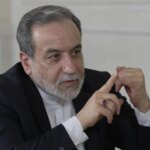
Iranian Foreign Minister Abbas Araqchi confirmed today, Tuesday, that Tehran informed the mediators that its goal is to end the war completely, and not to reach a temporary cessation of fighting, at a time when tensions are escalating with Washington over the nuclear file and sanctions.
Araqchi said that Iran stressed before the mediators the necessity of working to end the war completely, refusing to be satisfied with a temporary cessation of fighting.
In turn, the Speaker of the Iranian Shura Council, Muhammad Baqir Qalibaf, said that intensifying American pressure on Tehran will not lead to extracting concessions that were not originally part of the agreement.
Qalibaf wrote on the “X” platform that the Americans believe that “increasing pressure on Iran” will push it to make concessions that were not included in the agreement, criticizing US Treasury Secretary Scott Besent and Defense Secretary Pete Hegseth.
He called on Washington to stop waiting for a “miracle” from American officials, and instead work to “fix the mess they made.”
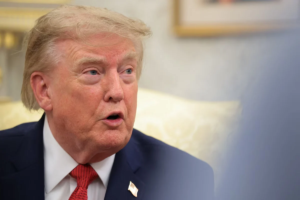
The Iranian positions come in light of the escalation of tension between Tehran and Washington regarding the nuclear issue and US sanctions, after US President Donald Trump reiterated that there are no current negotiations or talks with Iran.
Trump said in a post on the Truth Social platform: “There are no ongoing or scheduled talks or negotiations with the Islamic Republic of Iran,” adding that the naval blockade imposed on Iranian ports will remain in full effect.
Since the outbreak of the war, Iranian threats to ships have paralyzed navigation in the Strait of Hormuz, while Tehran has required ships wishing to cross it to obtain prior permission, and sought to impose a “services allowance,” which was rejected by Washington and other parties in the region.
On the other hand, the United States imposed a naval blockade on Iranian ports, preventing ships from entering or leaving them, in light of the deployment of American aircraft carriers in the region.
The two sides were supposed to reach a more comprehensive agreement on a number of complex files, most notably the Iranian nuclear program and the management of the Strait of Hormuz, within a period of 60 days following the signing of the memorandum of understanding between them last June.
However, the talks stopped before they began on July 7, and the deadline expired without any progress, amid an escalation of the war of words between Tehran and Washington.