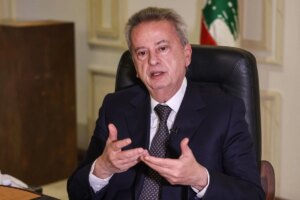
Former Lebanese President Michel Suleiman stressed today, Monday, that the protection of Lebanon can only be achieved through the state and its legitimate institutions, most notably the Lebanese army, stressing the need for the state alone to have the right to decide war and peace.
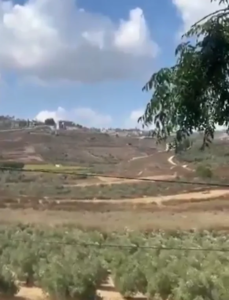
Suleiman’s position came on the 20th anniversary of the Lebanese army’s deployment in southern Lebanon, after an absence of 27 years, at a point that brought the military establishment back to the region on a large scale following the July 2006 war and the issuance of International Resolution 1701.
Suleiman pointed out that “the army’s deployment in the south on August 17, 2006 came in implementation of Resolution 1701,” pointing out that “the resistance considered at that time that it had achieved victory in its war with Israel.”
He wondered about the reasons that led, after that, to the continuation of “digging trenches,” “wars of support and revenge,” and interference in the Syrian war, considering that these practices contradicted the provisions of Resolution 1701.
Suleiman believed that the experiences that Lebanon went through during the past years and the tragedies that accompanied them proved that the solution lies in returning to the state and its legitimate institutions, stressing that the Lebanese army will continue to implement the decisions of the political authority in a way that preserves Lebanon’s sovereignty and unity.
He stressed that protecting the country requires “one national army, one sovereign decision, and a state that alone possesses the decision of war and peace,” in a position that re-raises the issue of the exclusivity of weapons and security and military decisions in the hands of legitimate institutions.
The anniversary of August 17, 2006 carries a special symbolism for the Lebanese Army, as on that date it began its widespread deployment in southern Lebanon, reaching the southern Litani region, coinciding with the strengthening of the deployment of UNIFIL forces, following the war between Israel and Hezbollah.
The deployment came in implementation of Resolution 1701, adopted by the UN Security Council on August 11, 2006, which formed the international framework for stopping hostilities and establishing new security arrangements in the south, including the deployment of the Lebanese army and UNIFIL forces and the strengthening of state authority in the region.
The army had been absent from a widespread and effective deployment in large parts of the south for 27 years, since 1979, due to Israeli wars and invasions and the security and political reality that governed the region, before 2006 constituted a fundamental turning point in its presence in the south of the Litani.
Suleiman’s position gains additional significance given his military background, as he assumed command of the Lebanese Army between 1998 and 2008, and was commander of the military institution during the July War and the army’s deployment in the south in 2006, before his election as President of the Republic in May 2008.
From this position, his current position is directly linked to a period in which he was one of the most prominent military officials, when the army took over the deployment in the south under extremely sensitive security and political conditions.
Twenty years after that station, Resolution 1701 returns to the forefront of the Lebanese debate in light of the successive military developments in the south and the efforts aimed at consolidating state authority and restricting military and security decisions to legitimate institutions.
Suleiman places this memory in a context beyond recalling a military event that occurred two decades ago, turning it into a political message about the future of Lebanon, based on an equation that he considers to have proven necessary after years of crises: one army, one authority, and one war and peace decision in the hands of the state.