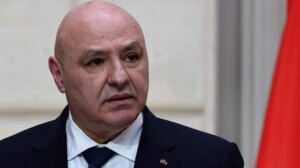
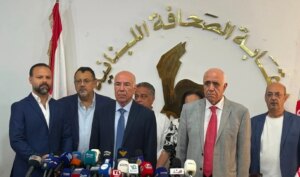
Prime Minister Nawaf Salam received a parliamentary delegation headed by MP Melhem Khalaf, from whom he received a copy of the letter signed by 86 representatives in support of the continuation of the mission of the United Nations Interim Forces in Lebanon, stressing the adherence to the official Lebanese position on the presence of a United Nations force in the south, even if the current formula of UNIFIL changes.
The delegation included MPs Bilal Al-Hashimi, Agob Pakradounian, Jamil Abboud, Adnan Trabelsi, Farid Al-Bustani, Michel Moussa, Yassin Yassin, Agob Terzian, Bilal Abdullah, Haider Nasser, Imad Al-Hout, Najat Saliba, Ibrahim Mneimneh, Paula Yacoubian, Salim Al-Sayegh, Firas Hamdan and Walid Al-Baarini.
Salam said: “I thank the representatives for their initiative, and I reiterate that the official Lebanese position adheres to the need for the presence of a UN force in the south that undertakes three basic tasks: monitoring and reporting, and coordination and communication.”
He revealed that he personally informed the Secretary-General of the United Nations, during his visit to Beirut and in the communications that followed, Lebanon’s clear position regarding the necessity of continuing the international presence in the south.
Salam added that the Secretary-General of the United Nations expressed understanding of the need for the continued presence of a UN force in the south to succeed UNIFIL, noting that this position was also reflected in his latest report related to the file.
Salam’s words gain remarkable significance in light of the ongoing debate about the future of UNIFIL, as he confirms that the Lebanese position is not limited to adhering to the international force in its current form, but is also directed towards ensuring that an international vacuum does not occur in the south if its mission is not able to continue in its current form.
After the meeting, Khalaf said that the delegation moved to the government palace after its morning meeting with the President of the Republic, Joseph Aoun, explaining that the discussion centered on adhering to the international presence in the south during the delicate stage that Lebanon is going through.
He stressed that the petition signed by 86 representatives, meaning more than two-thirds of the members of the House of Representatives, expresses a clear will towards a national decision that preserves the “international umbrella” in Lebanon.
Khalaf explained that the delegation stressed before Salam the necessity of continuing the basic tasks performed by the international force, foremost among which are monitoring, reporting, coordination and communication, tasks that he said have been linked to UNIFIL since its establishment in 1978.
Khalaf linked the parliamentary move to a state of anxiety over regional and field developments, considering that Lebanon needs at this stage to maintain stability, especially in the south, by adhering to international legitimacy and UN resolutions.
He pointed out the possibility of a shift in the nature of the power in the south, but stressed that any future formula must remain international and maintain the framework of international legitimacy.
Salam’s position intersects with what President Aoun announced before the same delegation, as he stressed that Lebanon’s first option is to extend UNIFIL, with the second option, if that is not possible, being to create a force that has the required legal framework and prevents an international vacuum in the south.
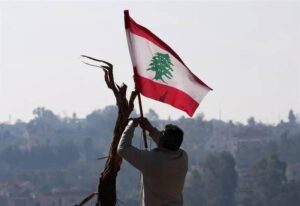
UNIFIL has been deployed in southern Lebanon since 1978, while its missions and number expanded significantly after the July 2006 war and the issuance of Resolution 1701, becoming an essential part of the mechanism for monitoring the field situation and coordinating with the Lebanese army.
The future sensitivity of the international force increases in light of the ongoing Israeli escalation in the south and the diplomatic moves related to the implementation of Resolution 1701, the strengthening of the Lebanese army’s deployment, and the extension of state authority.
With the parliamentary petition reaching both Baabda and the Grand Serail, an official and parliamentary Lebanese position is crystallizing based on the priority of extending UNIFIL, but with preparation for an alternative option that ensures the survival of an international umbrella that performs the functions of monitoring, coordination and communication and does not leave the south facing an international vacuum.