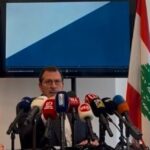
Israeli Communications Minister Shlomo Karei, from the Likud Party, ignited a wave of anger among Israelis residing outside the country, after he called on them not to come to Israel to participate in the 2026 elections, considering that those who do not live in the country should not come solely with the aim of changing the government, and accusing the left of trying to “bring large numbers” from abroad to vote.
According to a report by journalist Roi Rubinstein on the Israeli website Ynet, Karai’s statements on Wednesday provoked angry reactions from Israelis who live in different countries and insist on their right to participate in the elections despite their residency outside Israel.
“There are a lot of people who left the country because of political circumstances,” said Lilach Shani, who lives in New York with her husband and two children. “Saying that since we don’t live in the country we don’t have the right to vote is ridiculous, because our identity is Israeli.”
Karai spoke in an interview on Radio 103, and was asked why Israelis are not allowed to vote from abroad as other countries do. He replied: “I believe that whoever lives in the state is the one who should influence its future, and whoever does not live in it is invited to immigrate to it. Every Jew has the right to immigrate to the country, influence it and build it.”
He added: “The left is now trying to bring in large numbers from abroad. Whoever does not live here in the country does not come just because of the ‘No to Bibi’ slogan, in an attempt to change the government.”
In response, Shani said: “In the end, we are all citizens of the country. Even today, when they ask me whether I am an American first or an Israeli, I define myself as an Israeli first. The question of our return always remains on the table, and I visit the country every year and will also come to vote in the upcoming elections. Do I want my children to return to the country today? No. And I want to do my part in changing the situation.”
Anat Ron-Kendel, an Israeli who has lived in Oxford, England, since 1994, also responded sharply to Karai’s statements. Ron Kendel witnessed her father, Shlomo Ron, being killed before her eyes in a Hamas attack on October 7, during a visit to Nahal Oz.
She said: “It is not only about who lives, but also about who died. My father, my grandmother, and my grandfather sacrificed their lives so that there could be a state, so I ask him to show a little respect to those who established the state, sacrificed for it, and contributed to its prosperity.”
She added: “Since October 7, I feel that Israel is like a fortified refuge for us in the world. I have been living here for 31 years, and since I survived I have been feeling the atmosphere here in England, and I am not sure what the future will be like here. The basis of Zionism is that Israel is a refuge for the Jews, and therefore I must have, like any citizen who can, the responsibility and ability to influence, and for me to save the state.”
Ron Kendel continued: “Israel is not a country we are leaving. As an Israeli, I always remain connected to it and always want to return. Saying something like this shows the extent to which he and his coalition partners do not understand this complexity and deep connection that people carry no matter where they are.”
She added: “Minister Karai must also understand that we bear the repercussions of the government’s decisions. Anyone who has been sitting there for three years should not remain there after October 7. I expected a little shame from Karai. In England, this would not have happened. The leaders here have integrity.”
In turn, Keren Tsch, who lives in Portugal and had already bought tickets to return to Israel in order to vote, said: “Mr. Karai must understand that in every other country citizens can vote at the consulate, and Israel is the only one that does not allow this.”
She added angrily: “Perhaps if the authority in Israel were rational and humane, we would live in the country, but years ago the authority in the country became criminal, and it is the reason I left the country that I love so much.”
Thus, Karai’s statements moved from a discussion about the voting mechanism for Israelis living abroad to a broader debate about their relationship with the state and their right to influence its political course, at a time when Israel is preparing for the 2026 elections.