November 16, 2026

Middle East Airlines (MEA) continues to modernize its fleet and enhance its operational capabilities, investing in the future of Lebanese air transport despite the economic crises, wars, and successive security challenges the country faces. These efforts come within the framework of maintaining air safety standards and expanding the horizons of connectivity between Lebanon and the world.
In a prominent milestone in the fleet modernization process, the company is preparing to receive a new, advanced Airbus A321XLR aircraft. The plane is scheduled to arrive tomorrow, Tuesday, at Rafic Hariri International Airport in Beirut, where an official reception will be held for it, reflecting the importance of continuing investment in the operational structure of the national carrier, despite the difficult circumstances.
On this occasion, the Middle East, in cooperation with the European company Airbus, organized a field visit for a Lebanese media delegation to the company’s factory in the German city of Hamburg. The delegation was briefed on the stages of manufacturing and equipping aircraft, starting with assembly and installation of systems, all the way to the precise tests that precede the aircraft’s entry into commercial service in one of the most prominent industrial centers for the production of the “A320” family of aircraft.
The A321XLR aircraft, whose three letters mean “Extra Long Range”, is distinguished by its ability to radically change the operational equation. It is capable of flying a distance of up to 4,130 nautical miles (about 7,650 kilometres), achieving an increase of about 55% in range compared to the “A321neo” model, which allows long flights to be operated using a single-aisle aircraft with high fuel efficiency.
These characteristics give Middle East Airlines wider options for future planning of its flight network, and to study more distant destinations without the need to operate wide-body aircraft such as the A330. Technical maps show the plane’s ability to reach several cities from Beirut, including London, Dakar, Abidjan, Accra, Lagos, Abuja, Kano, Libreville, and Kinshasa.
The technical specifications of the new aircraft include a central rear fuel tank with a capacity of about 13,000 liters, and structural reinforcements that allow the maximum take-off weight to reach about 101 tons. It is designed to accommodate 160 passengers, distributed among 22 seats in business class and 138 in economy class.
This step acquires exceptional significance in view of the company’s role during periods of security tension and military escalation, as it continued to operate its flights within the available capabilities despite the major challenges at Beirut Airport and the decline in the movement of foreign airlines, which ensured the preservation of Lebanon’s connection with the outside world and secured travel and return to the country.
Economically, the development of the national carrier contributes to facilitating the movement of passengers, supporting the tourism and business sectors, and the movement of Lebanese expatriates, as well as improving the management of the company’s operating costs thanks to the efficiency of fuel consumption in modern aircraft, which enhances Lebanon’s strategic presence on the map of international air transport.
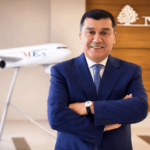
These achievements come under the leadership of the Chairman of the Board of Directors of Middle East, Mohamed Al-Hout, who launched the path of development and modernization since after the last war, to play a pivotal role with his strategic vision in strengthening the company’s position, overcoming successive crises, and preserving the continuity of the national carrier as one of Lebanon’s most prominent interfaces abroad.