November 16, 2026

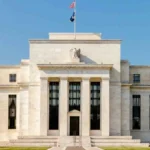
Jeff Schmid, President of the Federal Reserve Bank of Kansas City, warned of continued inflationary pressures in the United States, stressing that the central bank still has some way to go to control rising prices and return them to stable levels.
Schmid explained, during his participation in a conference in Hawaii, that the Fed has the necessary tools and bears responsibility for confronting price pressures, noting that the pace of price increases is still worryingly higher than the target of 2%, and is not moving in the desired direction. Although he did not explicitly call for an interest rate hike, his statements – reported by Reuters – reflected serious concern about the continuation of inflation.
Schmid criticized explanations that attribute the rise in prices exclusively to supply-side shocks, indicating that this proposal ignores the relationship between supply and demand. The imbalance between them contributes to fueling inflation, pointing out that supply disruptions push prices to rise further when coupled with strong demand in the markets.
He stressed that demand represents a fundamental pillar in the inflation equation, and that the impact of monetary policy on it gives the Fed the ability and responsibility to intervene and rein in prices, rejecting the belief that the sources of inflation currently linked to demand are outside the scope of the influence of the central bank’s tools.
It is noteworthy that Schmid does not have the right to vote during the current year in the meetings of the Federal Open Market Committee, and his positions come amid rising expectations about the direction of the next US monetary policy.
Expectations of a rate hike in December
This comes at a time when the Federal Reserve fixed interest rates at its last meeting last month, after having raised them by 0.25 percentage points in September to settle in a range between 3.75% and 4%.
However, recent higher-than-expected inflation data, along with statements from other officials such as Christopher Waller, have fueled speculation of a resumption of monetary tightening. According to futures trading, investors are likely to raise interest rates by a quarter of a percentage point at the December meeting, with the possibility of a half-point increase being slim.
These expectations present monetary policy makers with the challenge of carefully balancing between curbing inflation and avoiding harm to economic activity.