November 14, 2026

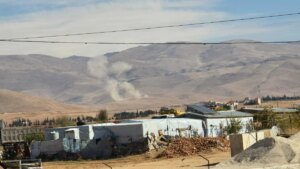
The Minister of Information, Lawyer Paul Morcos, announced that Lebanon will submit a parallel report to the Human Rights Council early next month regarding the Israeli attacks, in conjunction with the National Committee for International Humanitarian Law’s review of a draft report prepared by a fact-finding mission. He stressed that efforts focus on liberating the south, stopping the attacks, returning the people and rebuilding their villages, completing the liberation of the prisoners, and addressing the potential vacuum resulting from the withdrawal of UNIFIL forces.
This came during an introductory field tour by Markos from the center of the Nabatieh municipality, which included the destroyed commercial market and the town of Zraria, to honor the families of the martyrs and injured journalists. He stressed the symbolism of Nabatieh’s steadfastness, saluting the martyrs of the press and media and those injured as a result of the Israeli attacks, and thanking the media professionals accompanying him from Beirut.
On the eve of the anniversary of independence, Morcos linked the state’s presence in the south to the meaning of independence, stressing that Lebanon cannot live without the pulse of its south. He described solidarity with the displaced as an embodiment of national unity, calling for building a strong, capable and just state that provides security and services to the people of the South as a right of theirs and a duty of the state.
The Minister explained that he was briefed by the Ministers of Public Works, Health and Communications on the implemented and planned steps, pointing to support for government hospitals, and a new supply for the government hospital within two weeks, in addition to work on electricity conversion stations and expansion of the fiber-optic network, pointing to the return of communications by about 90% as work continues to restore it completely.
Regarding diplomacy, Morcos indicated that the intensive contacts and visits aim to stop the attacks and achieve the demands of the South, considering that addressing the potential void of UNIFIL’s withdrawal is a supreme Lebanese interest that requires international attention.
As for the media level, Morcos announced the adoption of a new media law that regulates websites and criminalizes hate speech, revealing a draft law soon to regulate the work of influencers and bloggers, and stressing that the competent judiciary is pursuing publishing crimes. He pointed out the implementation of awareness campaigns in cooperation with UNESCO, UNIFIL, the International Committee of the Red Cross, and production companies to rationalize the discourse and prevent the means of communication from turning into combat fronts.
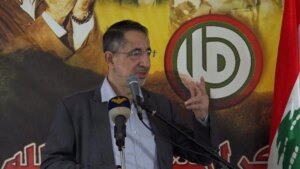
In the legal context, Morcos met with Deputy Prime Minister Tariq Mitri, Chairman of the National Committee for International Humanitarian Law, which prepared the legal file for violations against civilians, journalists, and the health and emergency sectors. He stressed the coordination of the Ministry of Information with international bodies and the Human Rights Council, stressing the continuation of legal follow-up in rejection of the Israeli attacks that violate the Geneva Conventions of 1949 and their 1977 Protocols, and called on media professionals and influencers to support the path of prosecution and use precise legal terminology such as “genocide.”