November 14, 2026

The Lebanese-American Coordination Committee (LACC), in an escalatory position issued simultaneously by Beirut and Washington, warned of the repercussions of the continued obstruction of sovereign and reform decisions in Lebanon, expressing deep concern about what it described as “diluting” the implementation of Cabinet decisions related to arms control. She stressed that the widening gap between the Lebanese authority’s commitments and practices threatens the chances of restoring the state, and exposes the country to increasing security and structural risks amid warnings of a “quiet coup” against the constitution and a threat to civil peace.
The committee explained that the current stage requires deciding sovereign and constitutional options, noting that disrupting decisions, tampering with their references, and subjecting their implementation to bargaining exhausts the opportunity to restore the state. It expressed its concern about diluting the implementation of the Cabinet decisions issued on August 5 and 7, 2025, and March 2, 2026, in addition to international resolutions 1559, 1680, and 1701, considering that this approach allows the continuation of illegal armed structures, first and foremost the military structure of Hezbollah and the illegal Palestinian weapons.
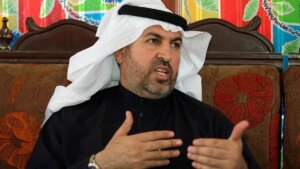
The committee linked its position to a series of security incidents that took place in Beirut and various Lebanese regions, including the case of the explosives truck in Dahr al-Baydar, the arrest of 5 members suspected of belonging to Hezbollah in the Bsharri and Batroun outskirts, and the shooting attack on a UNIFIL patrol near Wadi Gilo on November 10, 2026, in addition to the murder of former Iraqi MP Ahmed Al-Alwani in Beirut. She called for the truth to be revealed judicially and to provide full political support to the army, security services and the judiciary to end cases outside the authority of the state, warning that delaying in dealing with these files endangers civil peace.
At the constitutional level, the committee stressed that the constitution is the supreme reference for all authorities, rejecting any attempt to place political will above its provisions or link the implementation of legitimate decisions to the approval of de facto powers. She accused the use of the concepts of sovereignty and partnership to justify dual arms as establishing a “quiet coup against the constitution,” calling for holding political performance accountable and preventing public websites from being turned into platforms to cover obstruction.
On the negotiating track, the committee warned that disrupting the arms control might thwart the framework agreement and its implementation path, holding the internal forces whose commitment was delayed responsible for exposing Lebanon to devastating risks. It accused Hezbollah of being linked to the Iranian agenda and using Lebanon as a card in regional conflicts, demanding the implementation of Lebanese commitments within clear time limits, in parallel with obliging Israel to stop its attacks.
In the reform file, the committee criticized the continuation of the system of clientelism, quotas, and corruption, calling for the adoption of measurable measures that include the independence of the judiciary, strengthening financial accountability, imposing transparency on public spending, and protecting the rights of depositors.
As for the Beirut Port explosion file, the committee confirmed that the issuance of the expected indictment and indictment proceedings in the crime of August 4, 2020 is a decisive step in ending impunity, stressing the need for an independent judiciary and a political authority committed to implementing arrest warrants without immunities.
At the conclusion of its statement, the Coordination Committee renewed its adherence to the leadership role of the United States and its allies to prevent keeping Lebanon hostage to weapons and corruption, affirming its continued support for the establishment of a sovereign and free Lebanese state. It is noteworthy that the statement was issued on behalf of the organizations affiliated with the committee, which are: the American Lebanese Policy Institute (ALPI-PAC), the Rally for Lebanon (AFL), the Lebanese-American Renaissance Partnership (LARP), the Lebanese for Lebanon (LFLF), the Lebanese Information Center (LIC), and the World Lebanese Cultural University (WLCU), with the participation of the Civic Impact Forum (CIH) as the advisory organization.