November 12, 2026

“Lebanon Debate” – Sidra Diab
In recent days, the Bank of Lebanon appeared with two positions that raised concerns among depositors. The first was his indication, within the framework of amending Circulars 158 and 166, that the amounts previously received by depositors will be taken into account within the upcoming Financial Regularity and Deposit Recovery Law, which means that their fears that these amounts will be counted within the amount of $100,000 that is supposed to be returned to them are close to being realised.
As for the second position, it was represented in his announcement to refrain from issuing any statements, statements, or media briefings throughout the period of consultations with the International Monetary Fund, and to leave the announcement of the information and conclusions that he deems appropriate to the Minister of Finance at the end of the visit.
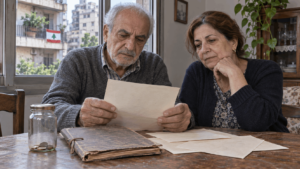
This secrecy increases the anxiety of depositors, who have been waiting for more than seven years to recover their money, after they were prevented from disposing of their deposits, and some of them died before recovering their rights, while proposals are still being put forward that they consider unfair to them, and may lead to them bearing an additional portion of the crisis’ losses.
Do the closed consultations with the International Monetary Fund hide unpleasant surprises for depositors? What is their position on the Bank of Lebanon’s decision to withhold information related to the fate of their money?
In this context, the head of the Depositors’ Cry Association, Alaa Khorshid, in an interview with “Lebanon Debate”, called on the Bank of Lebanon to retract its decision and announce the results of the discussions and what is happening behind the scenes, in addition to the demands of the International Monetary Fund, in full transparency before public opinion.
Khorshid stressed that the issue directly relates to the rights of depositors and their money, and affects, according to him, more than 700,000 Lebanese citizens, who have the right to know what is being researched and decided regarding their deposits.
Perhaps what increases the danger of this silence is the absence of bridges of trust between depositors and the relevant authorities, in light of repeated attempts to justify losses or hold depositors part of the responsibility for them, sometimes under the pretext that they benefit from high bank interest, and sometimes by questioning the legitimacy of some deposits.
However, is the depositor blamed because he placed his money in a licensed bank and received the interest offered to him within a banking system subject to the supervision of the Bank of Lebanon? Is it reasonable for him to bear alone the consequences of financial and monetary policies in which he was not a partner in making decisions?
The most important question is: Are depositors’ viewpoints being listened to and their representatives included in the discussions that will determine the fate of their money?
In this context, Khorshid revealed the absence of any actual communication channel between the parties conducting discussions with the International Monetary Fund and the depositors and their representatives.
He explained that the Depositors’ Cry Association had previously met with the Prime Minister, and demanded that it be represented in the discussions and express its opinion on the decisions related to the fate of deposits, noting that it had received promises to hold discussions with the Prime Minister’s advisors, but these promises were not implemented.
He added that the association also contacted Finance Minister Yassin Jaber and the Bank of Lebanon to demand the involvement of depositors and listen to their opinions, but without any serious response to date, considering that the depositors’ point of view is not taken seriously.
Khorshid expressed his fear that the silence surrounding the negotiations might be part of a plan being prepared against depositors, reiterating his demand for a clear and transparent announcement of the results of consultations with the International Monetary Fund.
What increases the anxiety of depositors today is the statements of some officials in the current government, who are trying to evade any responsibility for the crisis, and portray themselves as the savior coming to rescue depositors from the “setback of a lifetime.”
In this context, Khorshid criticized Finance Minister Yassin Jaber’s statement that the current government did not cause the banking crisis, but rather came to work to solve it, considering that this talk is not encouraging, because the political forces participating today in government, which named Minister Jaber, are the same ones that participated in successive governments during the past thirty years, and in making the decisions that led to the collapse, including the decision to stabilize the lira’s exchange rate and support policies.
Khorshid considered that most of the political parties in power today participated, in one way or another, in the decisions that led the country to the crisis, stressing that responsibility cannot be evaded on the pretext that the current government was not the one that caused the crisis.
Between the silence of the Bank of Lebanon and the absence of depositors from the negotiating table, the question remains: Will consultations with the IMF lead to a solution that returns rights to their owners, or to a new settlement for which depositors will pay from their money?