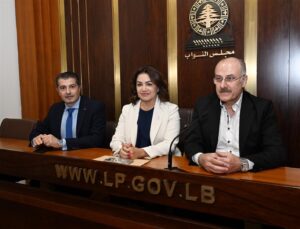
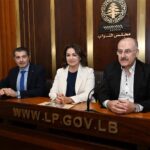
Today, the Minister of Finance, Yassin Jaber, made a comprehensive presentation before the Parliamentary Finance and Budget Committee in its first meeting dedicated to starting the discussion of the draft budget for the year 2027. Jaber placed the project within a medium-term financial and reform vision that extends for five years, aiming to protect financial and monetary stability, respond to social and humanitarian needs, restore confidence, and pave the way for Lebanon to recover and sustainable growth.
Jaber stressed that the 2027 budget does not constitute a separate measure, but rather represents a basic step within a broader path to address the state’s financial obligations, reform the banking sector, and contribute to recovering deposits within an integrated framework, in addition to re-providing financing for the economy to move from the stage of crisis management to recovery and reconstruction and benefiting from regional opportunities.
The Minister of Finance explained that this path aims to achieve primary surpluses ranging between 2.5 and 3 percent of the gross domestic product, in line with the directions discussed with the International Monetary Fund. This aims to build a reliable financial base that allows restructuring the public debt, recapitalizing the Bank of Lebanon, fulfilling obligations, and restoring confidence to open the way for financing and investment, stressing that building this base does not take place at the expense of social needs or conditions for recovery.
Jaber touched on the precise circumstances under which the project was prepared, as a result of the intersection of the repercussions of internal crises with the regional war, which left material damage of no less than $12 billion since the year 2024. He pointed out that an economic contraction of 5.2 percent was recorded in that year, with an additional contraction of about 7 percent expected in the year 2026, coinciding with the rise in inflation to 17 percent by the end of last September, the increase in the cost of energy, transportation, and basic services, and the expansion of social needs.
Jaber stressed that the financial and monetary stability achieved is not a guaranteed gain, but rather requires continuing financial discipline, improving revenue collection, and arranging spending priorities. He pointed out that the governing principle of the project is that financial obligations should not exceed the state’s ability to bear them, while adopting realistic spending ceilings and close coordination with the Bank of Lebanon to manage liquidity and maintain exchange rate stability.
On the revenue side, Jaber presented project estimates amounting to 628,868 billion liras (about 7 billion dollars), compared to 6 billion dollars in the 2026 budget, based on the assumption of a conservative growth of 3 percent and inflation of 10 percent. He explained that enhancing revenues will depend on expanding the tax base, combating evasion, and improving compliance without imposing new taxes, noting that revenues for the first nine months of 2026 increased by 20 percent compared to the same period of the previous year thanks to corrective policies and activating collection.
On the social level, Jaber indicated that current spending allocations amount to 570,299 billion pounds, and include supporting the continuity of the public sector and its operational capacity, and covering the cost of twelve additional basic salaries approved during the year 2026 for employees, retirees, and public institutions at an annual cost of approximately one billion dollars. The budget also includes allocating about $70 million to the “Aman” program, 9,227 billion liras to the National Social Security Fund, and for the first time allocating 2,118 billion liras to support housing loans, and a thousand billion liras to support solar energy loans.
Regarding the response to the repercussions of the war, the project allocated 7 thousand billion liras through the budgets of the Southern Council and the High Relief Commission to meet the shelter and structural support needs of the displaced and affected people, in addition to relying on soft external financing such as a World Bank loan worth 250 million dollars and a loan from the French Development Agency worth 70 million euros.
As for the investment side, investment expenditure allocations amounted to 58,569 billion liras, with priority given to accelerating project implementation and benefiting from the World Development Bank’s loan portfolio amounting to about $1.4 billion in the energy, water, agriculture, reconstruction, and digitization sectors.
Jaber concluded by stressing that these priorities fall within a broader vision to reposition Lebanon economically as a transit and trade hub in the Eastern Mediterranean, stressing the importance of continuing to work with the International Monetary Fund, completing reforms, addressing the financial gap, restructuring banks, protecting small depositors, and getting off the gray list, as they are essential pillars for restoring confidence and achieving sustainable growth.