October 17, 2026

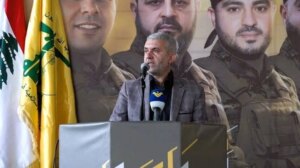
The head of the “Baalbek-Hermel Bloc,” Representative Hussein Haj Hassan, opened the file of the electricity sector in the governorates of Baalbek-Hermel and the Bekaa, highlighting the supply crises, breakdowns, facilities, and collection mechanisms, and reiterated his categorical rejection of what he described as the “injustice” occurring in the region, while stressing the need to speed up the repair of faults and achieve justice in the distribution of electrical supply between the various Lebanese regions.
This came during an expanded meeting held at Hezbollah’s governmental institutions center in Baalbek, devoted to discussing the reality of electricity and its service and operational problems. Representative Ali Al-Miqdad, the official in charge of the electricity file in government work, Suleiman Shamas, and the official in charge of government institutions’ affairs in the Bekaa, Hani Fakhr Al-Din, participated in the meeting, in addition to two representative delegations from both the Electricité du Liban and the service provision company “KVA.”
Hajj Hassan explained that the meeting falls within the framework of resuming the continuous follow-up of this vital file after the interruption of communication as a result of the war conditions, praising the cooperation of the Electricité du Liban and the service company, despite recording some observations. He pointed out that the discussion focused on four main axes, starting with the electrical supply file; He pointed out that Lebanon’s general need is about 2,000 megawatts, while the current production volume does not exceed 400 megawatts, equivalent to only 20% of the total demand.
He indicated that about 150 megawatts of the total production are allocated to vital facilities such as the airport and water, leaving about 200 megawatts directed to citizens, which is supposed to provide nutrition for approximately five hours a day (4.8 hours). Despite this, Hajj Hassan pointed out that the Bekaa regions, in their various departments, receive only three hours of food per day, considering that this difference means deducting two hours from the region’s share for the benefit of other regions. He asked sarcastically: “We thank them for this justice! We do not accept this injustice, and we will not be silent about it.”
In the second axis, related to service lines for artesian wells and hospitals, Hajj Hassan called for the necessity of adopting a unified standard in all regions, either by providing electrical current to these lines around the clock, or applying the same procedures to everyone without exception.
As for the basic facilities file, the MP pointed out that there are four major facilities in the region, including high-tension lines (66 and 220 kilovolts) that were subject to malfunctions and theft, criticizing the delay in repairing them despite repeated reviews. He also inquired about the reasons behind not providing the necessary cells for the Hermel station, as well as the fate of the Bednayel station, which the concerned authorities have committed to since 2019 and are still waiting until now.
Regarding daily maintenance and collection services, Haj Hassan noted that there has been significant progress in the pace of installing meters, calling for accelerating this process, especially in the Baalbek and Rayak districts, and thanking the Electricité du Liban and KVA for their rapid response to addressing transformer faults within the neighborhoods.
Hajj Hassan concluded by affirming the principle of citizens’ commitment to pay consumption bills to the state, stressing by saying: “We are in favor of collection, and we are in favor of people paying what they owe, but on the condition of securing electricity.” In the same context, he raised the problem of delayed meter reading for months and sometimes years, which results in a sudden accumulation of bills on citizens. He called for the regular collection process in a way that preserves the interests of the state, the institution, and the citizen together, and warned against using delayed issuance of bills as a means of “political propaganda aimed at accusing specific regions of defaulting on payment,” as he put it.