October 15, 2026

A report prepared by journalist Danielle Grayman-Kenard in the Jerusalem Post newspaper, based on an analysis issued by the Jerusalem Center for Foreign and Security Affairs (JCFA), revealed new accusations against Hezbollah of running a cross-border financial system extending from Latin America and Africa to Europe, with the aim of financing its activities and circumventing international sanctions by taking advantage of European legal loopholes.
The prominent researcher at the Center and member of the Dvora Forum, Ella Rosenberg, explained that the European Union’s failure to classify Hezbollah’s political wing as a terrorist organization gives it a wide margin to move freely in collecting money and laundering the proceeds of criminal activities, including human trafficking, through front companies, charities, and commercial networks within the European continent, in addition to weapons and resources, the bulk of which it obtains from Iran.
At the local level in Lebanon, Rosenberg noted that Law No. 164 issued in 2011, which criminalizes human trafficking, has been repeatedly undermined by institutional corruption and Hezbollah’s influence. It shed light on reports dating back to 2016 indicating the existence of prostitution and sexual exploitation networks that worked with cooperation and allegations of protection from officials linked to the party to prevent the security services from interfering, in exchange for a share of the profits directed to finance social welfare programs and the expenses of the families of the dead members.
In Latin America, especially Argentina, Brazil, and Paraguay, the report pointed to alleged cooperation between elements linked to Hezbollah and violent drug gangs, such as the “Los Zetas” cartel, in addition to the involvement of logistical centers in human trafficking networks that exploit victims stuck in high debts to force them into forced labor, with the financial proceeds later subjected to laundering operations through trade-based mechanisms and transported to Beirut.
As for West and Central Africa, Rosenberg reported the existence of a “deep financial footprint” of Hezbollah, which includes exploitation of Lebanese communities and local residents, alleged involvement in the illicit trade in “blood diamonds” and drugs, organizing cash smuggling operations, and using real estate and car commercial deals to transfer money in ways that are difficult to trace to circumvent sanctions.
These accusations come at a time when controversy is escalating in Lebanon regarding the party’s funding sources, following reports that it received $200 million from Iran to provide relief to the displaced, which the US State Department denied and considered fabricated, while Hezbollah announced the provision of financial aid amounting to $14,000 to displaced families following a Reuters report.
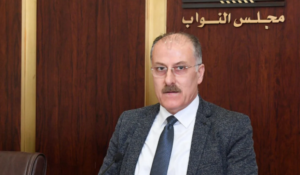
In this context, the newspaper quoted MP Fouad Makhzoumi as confirming that there are serious questions about the sources of this money and the mechanisms for introducing and distributing it outside the official financial frameworks. Makhzoumi stressed that helping those affected is a national duty, but it does not constitute a cover for parallel financial systems, stressing that “there is no sovereignty for a state that does not monopolize weapons and does not impose its authority over the movement of money, and a state within a state cannot be accepted.”
The Israeli analysis concludes that Hezbollah’s financing file is placed within the framework of international, cross-border financial and criminal networks that take advantage of Western legal loopholes to transfer funds to Beirut, which exacerbates internal questions about the sources of funds and the mechanisms for controlling them.