October 15, 2026

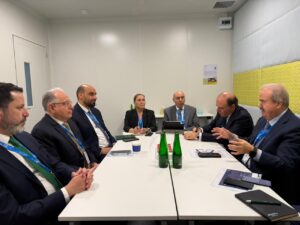
Within the framework of the national campaign to support Lebanese farmers and secure sustainable solutions for the 2026 apple season, the Minister of Agriculture, Dr. Nizar Hani, held an expanded meeting with representatives of oil companies, during which he discussed mechanisms to reduce the burdens of storing and marketing the crop in a way that ensures the protection of farmers’ yields and the quality of production.
The meeting resulted in a joint cooperation initiative that includes oil companies providing 225 barrels of diesel as a first payment to operate apple preservation refrigerators, with ongoing efforts by Minister Hani to secure an additional 300 barrels. This plan targets 66 refrigerators for storage in the regions of Akkar, the North, and Mount Lebanon, with about 10 barrels for each refrigerator. The facilities also include companies offering a discount of about $20 for each ton of the cost of transporting diesel to the beneficiary refrigerators.
In terms of supporting local marketing, companies expressed their willingness to purchase 100 tons of Lebanese apples and distribute them through their network of gas stations, in an innovative step to promote the crop through non-traditional channels and stimulate local consumption.
Minister Hani stressed that the initiative represents a practical translation of the ministry’s road map, which is based on expanding markets, reducing production, storage and transportation costs, and strengthening partnership between the public and private sectors. He stressed that protecting national production and investing in food security and the stability of rural communities requires concrete steps that support the Lebanese farmer and preserve his labor and continuity in his land.
For its part, the Ministry of Agriculture continues its coordination to expand the base of participation in the national campaign, and to provide more support for storage refrigerators, in addition to its ongoing efforts to open foreign markets and facilitate the export of the crop, which is a basic pillar of the rural economy and a source of livelihood for thousands of families.