October 15, 2026

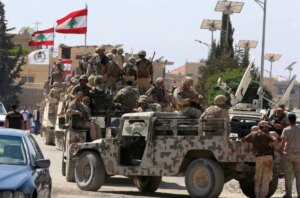
South Lebanon is facing a very sensitive security phase as the end of the mission of the United Nations Interim Forces in Lebanon (UNIFIL) approaches, in the absence of any international consensus on an alternative force, and the continued Israeli military presence in large areas of the south, amid mounting international warnings of the repercussions of a potential security vacuum.
In this context, the United Nations Under-Secretary-General for Peace Operations, Jean-Pierre Lacroix, revealed during a visit to Beirut and a report prepared by journalist Abby Sewell at the Associated Press, that fundamental questions remain unanswered about the future of the region after the end of the UNIFIL mandate at the end of 2026. Lacroix stressed that Lebanese officials unanimously agreed on the necessity of maintaining a UN presence to monitor and document violations and reduce tension between the Lebanese and Israeli armies, pointing out He presented several options for an alternative force, awaiting serious negotiations in the Security Council to issue an ugly decision, while being very keen for the voice of the Lebanese authorities to be clearly heard.
The decision to end the mandate dates back to August 2025, when the Security Council decided to do so in response to demands from the United States and Israel to accuse the force of failing to prevent the strengthening of Hezbollah’s capabilities. However, the field scene was radically transformed following the last war with the party in March and the fragile ceasefire that followed. Despite this understanding, the Israeli army continues to control large areas of the south and carry out demolitions and raids that destroyed thousands of homes and wiped out entire villages, while Hezbollah refuses to give up its weapons, amid growing fears of renewed war, especially with the possibility of the outbreak of a new Iranian-Israeli confrontation.
Following his meeting with Lacroix, President Joseph Aoun warned that the withdrawal of UNIFIL would create a dangerous security vacuum that would leave the south without international oversight. This danger is doubled given the force’s current tasks, which go beyond monitoring the Blue Line to accompanying aid convoys and facilitating the movement of civilians in areas under Israeli control within what is known as the “Yellow Line.” These are responsibilities that are shrouded in ambiguity about who will assume them later.
In a reading of the available options, Lacroix pointed to the survival of the United Nations Unarmed Military Observer Force (UNTSO), questioning its ability to work in isolation from the security environment provided by UNIFIL, especially in preventing unintended friction between Lebanese and Israeli soldiers. On the other hand, the European Union announced plans to establish a “support mission” limited to training the Lebanese army and security services, without assuming patrol or border monitoring duties, making it unable to fill the void that the international force will leave.
It is noteworthy that UNIFIL was established in 1978 to monitor the Israeli withdrawal, and its powers expanded after the July 2006 war to implement Resolution 1701. Although it later participated in the mechanism to monitor the 2024 ceasefire agreement alongside the United States, France, Lebanon, and Israel, the role of this mechanism declined with the outbreak of the March War. The force currently includes about 7,500 members out of 10,000 at the peak of its deployment, and will be given a full year after the end of its mandate to complete its withdrawal operations.
Between the Lebanese diplomatic efforts to achieve a final extension that have not been crowned with success so far, and the faltering search for an alternative formula, southern Lebanon remains stuck in a complex equation consisting of an international force preparing to leave, an ongoing occupation, and serious fears of a return to military confrontations in light of the unknown entity that will control the borders and prevent escalation in the future.