October 7, 2026

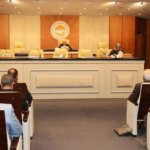
In a prominent political shift within the Libyan scene, the House of Representatives held in the east of the country, on Tuesday evening, elected Al-Salihin Abdel Nabi as its new president, succeeding Aguila Saleh, who spent about 12 years at the head of the Council. This change came in the wake of mounting parliamentary objections to the leadership style and decision-making mechanism.
Reuters reported that the elections were held one day after 98 representatives approved a new term system, limiting the term of the Council’s presidency and two deputies to one term of 12 months, which ended the leadership structure in place since the Council’s first elections in 2014.
In the same context, the agency quoted MP Jibril Ouhida as referring to a general state of dissatisfaction that prevailed among members of Parliament towards the previous leadership. Because of “many mistakes” and the way decisions were made without consulting representatives, he pointed out that attempts to communicate to address these problems failed. In conjunction with the election of the new president, the Council chose Tariq Al-Ashtar as first vice president, and Misbah Douma as second vice president.
Al-Salehin Abdul Nabi is considered a representative of the city of Tobruk in eastern Libya. He belongs to the same tribe from which Aguila Saleh descends, and he previously chaired the Libyan-Turkish Parliamentary Friendship Committee.
This political turmoil comes at a time when Libya is witnessing a sharp institutional and political division between East and West, amid continuing local and international efforts to resolve the crisis and pave the way for comprehensive national elections.
It is noteworthy that the House of Representatives, elected in 2014, is based in the east of the country and is considered one of the most prominent centers of political gravity during the years of crisis, while the Supreme Council of State – formed according to the 2015 agreement from members of the 2012 Parliament – is present in Tripoli alongside the National Unity Government.
This development turned the page on Aguila Saleh, who played a pivotal role in the political negotiations and was known for his close alliance with Field Marshal Khalifa Haftar, making it a remarkable shift in the balance of power in eastern Libya.
The new leadership, headed by Al-Saliheen Abdel Nabi, faces delicate political tests, which are managing the internal balances of Parliament, dealing with the national division, in addition to the possibility of contributing to the push towards relaunching the electoral process and ending the state of political fragmentation in the country.