October 7, 2026

The issue of the survival of the international emergency forces operating in southern Lebanon (UNIFIL) topped the Ain al-Tineh talks, where Parliament Speaker Nabih Berri received a parliamentary memorandum signed by 86 representatives demanding adherence to the presence of the international force and a reconsideration of Resolution 2790, amid serious warnings of serious security repercussions that could be left by any potential vacuum resulting from its withdrawal.
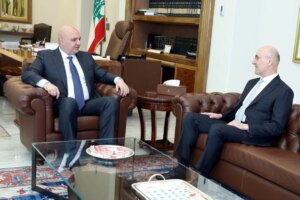
This came during President Berri’s reception of a parliamentary delegation that included MPs: Melhem Khalaf, Faisal Al-Sayegh, Nasser Jaber, Muhammad Khawaja, Qasim Hashem, Edgar Trabelsi, Michel Moussa, and Adnan Trabelsi, where the meeting discussed the latest political and field developments and general legislative affairs.
Following the meeting, MP Melhem Khalaf confirmed that the memorandum submitted represented a cohesive “described majority” on the necessity of UNIFIL remaining as a protective international umbrella in the south. He explained that the implementation of Resolution 2790 is linked to an integrated path that includes verifying the Israeli withdrawal, handing over the sites to the Lebanese army, and restoring the state to its full authority.
Khalaf pointed out the difficulty of implementing the decision at the current time, wondering about the possible mechanism for handing over 33 UNIFIL points on the Blue Line in light of the presence of territories that are still occupied. He warned that any withdrawal of the international force would leave the south vulnerable to the gravest dangers and security vacuum, especially in light of the vital role these forces play in securing humanitarian and safe corridors between the towns of Rmeish, Ain Ebel, Dibal, and the Lebanese interior.
Khalaf considered that the exit of UNIFIL and the creation of a vacuum would lead to “consolidating the occupation without strengthening the state,” stressing that this step would weaken the official presence instead of strengthening it, and would undermine the existing stability. He also highlighted the pivotal role of the international force in containing and addressing field frictions between the Lebanese and Israeli armies, referring to the events in Zawtar and Deir Mimas, and inquiring about the alternative capable of filling this void.
Khalaf concluded by emphasizing adherence to remaining under the relevant international resolutions, namely 425, 1701, and 2790, calling for either UNIFIL to maintain its current tasks or ensuring the presence of any alternative military force exclusively under the UN umbrella.
In a separate context, the Speaker of the House of Representatives continued his diplomatic meetings, where he received the Chargé d’Affairs of the Azerbaijani Embassy in Beirut, Farhad Golu Zadeh, in the presence of the official of the Amal Movement’s Central Foreign Relations Office, Ali Hayek, and the two sides discussed ways to strengthen bilateral relations and the general situation. Speaker Berri also met with the Chargé d’Affairs of the Embassy of the Syrian Arab Republic, Iyad Al-Hazzaa, accompanied by the Media Advisor to the Speaker of the Council, Ali Hamdan, where the discussion focused on developments in the political situation in Lebanon and the region and the prospects for Lebanese-Syrian relations.