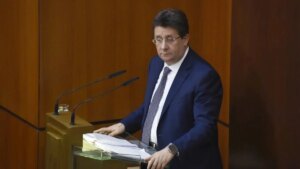
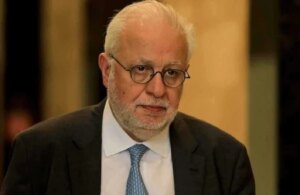
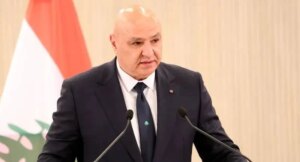
The Minister of Agriculture, Nizar Hani, accompanied by the Ambassador of the Kingdom of the Netherlands to Lebanon, Frank Mollen, conducted a field tour of a number of agricultural, educational and production sites in the Chouf region. The tour aimed to identify farmers’ needs, discuss agricultural education, marketing and food processing initiatives, as well as ways to enhance bilateral agricultural cooperation.
The Minister and the accompanying delegation began the tour in the town of Deir Dorit by meeting with bean farmers, where they listened to the most prominent challenges facing this sector, most notably the high cost of production, the availability of resources, the quality of the crop, and marketing mechanisms, while emphasizing the centrality of agricultural extension in keeping pace with farmers throughout the stages of production.
In the second stop, the delegation visited the Agricultural Technical School in Baakleen and met with representatives of the “Friends of Public Education Association,” learning about the school’s role in qualifying young people with agricultural and technical skills that meet market needs, and linking curricula to practical training. This visit falls within Minister Hani’s efforts to provide training opportunities for students of public agricultural schools in technical education institutions in the Netherlands, with the aim of refining their applied skills and transferring expertise to serve the Lebanese agricultural sector.
The tour also included the Al-Jabal Fruit and Vegetable Market, where the two sides inspected the market’s role in assembling fresh products and facilitating their access to merchants. The need to develop sorting, packaging, and distribution processes was emphasized to reduce waste, improve the quality of products and raise financial returns for farmers.
The tour concluded in the Debsi area in Dahr El Maghara in the Carob region, with a visit to carob manufacturing facilities. The delegation learned about the manufacture of molasses, sweets and other derivatives, highlighting the importance of food processing in raising the added value of crops, diversifying the sources of income of rural families, and enhancing the competitiveness of local products.
In a statement during the tour, Minister Nizar Hani stressed that agriculture is an integrated system that begins with knowledge and ends with markets and manufacturing, stressing that the ministry’s priorities are based on improving productivity and quality, rational management of water and resources, developing extension and training, and reducing post-harvest losses.
Hani concluded by expressing his aspiration that the partnership with the Netherlands will result in practical opportunities for exchanging experiences, especially in the fields of applied agricultural education and modern technologies, which will reflect positively on farmers’ income and create new job opportunities that will stabilize people in their villages.