Western reports revealed a remarkable shift in Russian military deployment, with the absence of Russian warships from the Mediterranean Sea for the first time in more than 10 years, amid increasing pressure on the Russian fleet and Moscow being forced to redirect a number of its naval vessels towards tasks related to protecting oil tankers belonging to what is known as the “Shadow Fleet.”
The British newspaper “The Telegraph” quoted Western officials as saying that Russia has no longer maintained a military naval presence in the Mediterranean since last June, after it diverted ships that were stationed in the region to northern Europe, where monitoring and detention of tankers linked to Moscow is escalating.
A NATO official said that the development is the first of its kind in more than a decade, after Russia had maintained a permanent naval task force in the Mediterranean since 2013, considering that the continued Russian absence from the region constitutes an important indicator of the pressures facing Moscow’s naval capabilities.
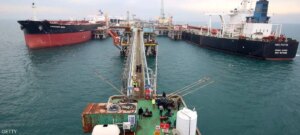
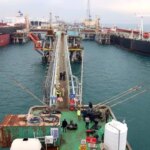
According to the report, Western operations against sanctioned oil tankers prompted Moscow to allocate warships to escort and protect a number of these tankers, especially in the English Channel and the waters of northern Europe.
Last June, the Russian frigate Admiral Grigorovich fired warning shots near a yacht carrying a British couple, in an incident that occurred two days after the British Royal Marines seized a tanker suspected of being linked to the Russian “Shadow Fleet.”
NATO countries, including France, Belgium, Germany, Estonia, and Finland, also carried out operations against ships linked to the network used to transport Russian oil, in light of tightening sanctions and oversight of Moscow’s exports.
This led, according to the report, to Russia keeping a naval vessel almost permanently in the English Channel, where the frigate “Nestrashimy” assumed patrol duties after it replaced “Admiral Grigorovich” in July.
The Russian Navy also faces logistical challenges related to providing fuel to ships operating far from Russian bases, which has led it to rely in some cases on refueling operations between ships at sea.
The report quoted a diplomatic source as saying that the pressure exerted by NATO put Moscow in front of an operational dilemma, and led to the emergence of what he described as a “Russian gap” in the Mediterranean.
This August, Russian President Vladimir Putin threatened to respond to operations to seize Russian commercial ships, considering that Moscow may resort to similar measures if these operations continue.
These developments come as the Russian Navy is still facing the repercussions of the war in Ukraine, especially the losses suffered by the Black Sea Fleet since February 2022, with a number of Russian ships and naval facilities being subjected to Ukrainian attacks.
In contrast, the Russian Northern Fleet continues to operate from its bases in Severomorsk and the Kola Peninsula, while increasing tasks for the Baltic Fleet are focused on coastal defense and escorting Russian ships in European waters.
The decline in Russian naval deployment in the Mediterranean coincides with the reorganization of Moscow’s military presence in Syria, after the political change that Damascus witnessed in December 2024.
On August 9, Syria and Russia reached a memorandum of understanding regarding the future of the Tartous and Hmeimim bases after negotiations that lasted 18 months, with the Syrian state assuming the management of the civilian facilities, while the military facilities are transformed into joint training and rehabilitation centers.
Damascus has already begun using commercial dock No. 4 in the port of Tartous, which was used by Russian forces, to receive civilian shipments, while Russian forces were seen transporting their equipment from parts of the site to other military facilities.
Tartous is of special importance to Moscow, as it has, over the years, been the only Russian naval maintenance and supply center in the Mediterranean, and an essential element in Russia’s ability to move militarily towards the Middle East and Africa.
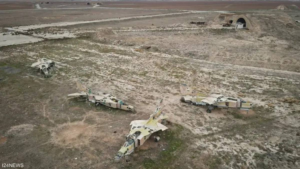
In parallel, Moscow is moving to strengthen its options in Libya, amid reports of Russian interest in developing its military and logistical presence in Tobruk and a number of Libyan air bases.
Between the Western pressures on the “Shadow Fleet,” the losses associated with the war in Ukraine, and the changes that occurred in the status of the Tartus and Hmeimim bases, Moscow is facing a phase of rearranging its naval deployment, while the absence of its ships from the Mediterranean, according to Western data, remains the most striking development in the map of its foreign military presence.