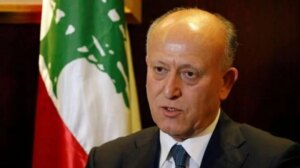
The head of the Arab Tawhid Party, Wiam Wahhab, opened the file of the gas market in Lebanon, making direct accusations about the existence of a monopoly that has been going on for more than 30 years, and calling on the American ambassador to Lebanon, Michel Issa, to investigate the file, after he said that pressure attempts to address it internally had not reached any result.
Wahab wrote on the “X” platform: “For more than 30 years, Al-Zain Company has monopolized gas in Lebanon and controlled prices, and no minister dared to address the matter because there is a political partner for the company.”
He added: “After we failed to put pressure to address the matter, I hope that Ambassador Michel Issa will investigate the file, and that Professor Nima Tohme will get out of this saga.”
The accusations made by Wahhab remain within the framework of his political position, and his post was not accompanied by new documents or detailed data proving what he mentioned regarding controlling prices or the presence of a political partner preventing the file from being addressed, and there has been no response yet from the entities and names he referred to.
However, the issue of the concentration of the gas import and storage market in Lebanon is not new, as it has been covered in press and economic reports over the years. Reports published from 2015 onwards spoke of the control of a limited number of companies over gas import, storage and distribution operations, and pointed to the role of companies linked to the name of businessman Talal Al-Zein in this sector.
Press reports have previously linked Nehme Tohme’s name to investments in companies operating in the gas sector, including Sidaco and Lebanon Gas Holding, along with other shareholders. This information goes back to records and reports published years ago, and does not in itself constitute proof of the accusations made by Wahhab currently or of the continuation of the same ownership structure to this day.
In 2016, reports extensively covered what they described as the “gas cartel,” speaking about the concentration of large shares of the market in a limited group of companies and the role of storage facilities in controlling the ability to import and compete. The issue of renting state tanks and private companies owning large storage capacities has also previously been raised as one of the factors influencing the market structure.
At a later stage, state oil facilities tried to enter directly into the gas import line with the aim of increasing competition, amid official talk at the time about trying to break the dominance of the main importer and provide the state with an independent share in the market. Reports indicated that the ability of some major companies to temporarily reduce prices was one of the most prominent obstacles facing former competitors.
But the issue of “controlling prices” is different from controlling a share of the market, as the price of a bottle of gas to the consumer in Lebanon is officially linked to the fuel price composition schedule issued by the Ministry of Energy and Water. The head of the Gas Sector Workers and Distributors Union, Farid Zainoun, had previously confirmed that the official prices of fuel and gas are linked to this schedule, while in March 2026 he called for tightening control over any sale of gas on the black market at prices exceeding the official price.
The gas sector in Lebanon suffers from broader problems related to the structure of import, storage and distribution, in addition to the presence of dozens of bottling and distribution companies. Zenon had previously indicated that there were about 165 gas bottle filling companies, including 114 licensed companies at the time, warning of chaos in some market circles and weak oversight.
As for Wahhab’s request to US Ambassador Michel Issa to investigate the file, it comes in light of a broad American diplomatic presence in Lebanese political and economic files. Issa currently holds the position of US Ambassador to Beirut, and in recent months he has participated in official meetings that dealt with political, economic, and security files with Prime Minister Nawaf Salam and Lebanese officials.
Wahhab’s position thus brings the gas issue back to the forefront of internal debate, after it had been the subject of accusations of market concentration and weak competition for years. The separation between the size of actual commercial shares, official pricing mechanisms, the composition of corporate ownership, and any potential political influence remains in need of up-to-date data and an official and transparent investigation that determines the facts and responsibilities away from mutual political accusations.