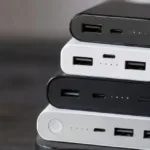
An overheated power bank may not only be a nuisance, but it can also affect the phone’s charging speed. In some cases, thermal protection systems built into chargers reduce the power transfer rate when the temperature rises, in order to protect the battery and internal components.
Why does the power bank get hot?
There are several reasons that may cause the power bank to overheat, the most prominent of which are:
1. Leave it plugged in for long periods
Continuing to connect the power bank to the phone or to the power source after charging is complete may generate additional heat, especially with frequent use.
2. Use low-quality chargers or cables
Unreliable accessories can cause unstable power flow, increasing component fatigue and overheating.
3. Poor ventilation
Placing the power bank on the bed, sofa, or under the pillow prevents heat from escaping, which leads to its temperature rising during charging.
4. Charge multiple devices at the same time
When more than one device is connected to the power bank, the load on its components increases, and this may lead to increased heat, especially in devices with limited capacity.
5. The charging cable is damaged
Damaged or low-quality cables can affect the efficiency of power transfer, thus increasing heat during the charging process.
6. There is a problem with the phone battery
An old or deteriorated phone battery may be the reason for the power bank to overheat, as a result of increased stress on the charging process.
What to do if the power bank overheats?
If the power bank becomes unusually hot, it is best to immediately disconnect it from the phone and the power source and put it in a cool, well-ventilated place until it cools down naturally.
It is also recommended to inspect it for signs of damage such as bloating, cracks, or traces of burning, and to inspect the charging cable as well. If the problem persists, avoid using the device and replace it with a reliable one or seek the help of a specialized technician.
How do you keep the power bank cool?
Use power banks, chargers, and cables from reliable sources.
Charge it on a hard, flat surface that allows air to pass through.
Avoid using it under blankets or pillows.
Do not leave it in the car or under direct sunlight.
Avoid running multiple ports simultaneously if the device does not support this efficiently.
Monitor its temperature during use, and stop charging if it becomes abnormally hot.
Store it in a cool, dry place when not in use.
The high temperature of the power bank can, in some cases, lead to slow charging of the phone due to thermal protection systems. Excessive and frequent overheating may indicate a problem with the power bank, the cable, or the phone itself, so it should not be ignored.