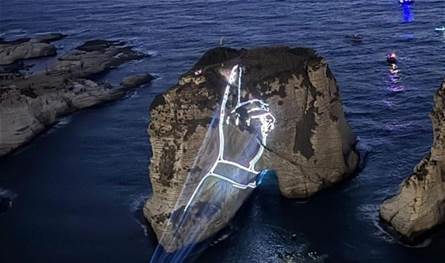
She wrote “Al -Nahar”: Wide -minded circles are seen with great concern to the scene that was drawn after the failure that the legitimate authority suffered in preventing a rude penetration of the law carried out by Hizbullah, pending its audience as usual, whether in the south, suburb, Bekaa, or the capital, war and peace. These circles say that Prime Minister Nawaf Salam’s i’tikaaf without sufficient clarifications in itself to reveal the great imbalance that has already coincided with the security and political behaviors that failed Salam and crossed the image of the decisive government in preserving the law and public regularity.
The circles themselves consider that this setback in the path of power will bounce negatively on the reputation and friendship of the entire state as long as the pillars of the state, the army and security forces do not correct what happened by re -consideration to the logic of the decisive law by arresting everyone who was involved in violating the generalization of the prime minister because “Hizbullah” light and succeeded and security measures were mainly a fundamental error because it allowed the party to mobilize its audience to crawl to the Rawsha And the dumping of the area with people with what is impossible with any security prevention under the weight of an inevitable clash that may lead to serious consequences. Therefore, it was necessary to prevent the permission to give permission to gather except with strict conditions guaranteed to implement, otherwise it will be prevented from absolutely and prevent the party from reaching the challenge of its challenge and breaking the decision of the authority, regardless of the reaction to this because the intentions of violating the law are clear from the basis. The same circles monitor the coming hours to show the reactions to what happened, especially since the prime minister’s i’tikaaf threatens a lot in the reality that proves that he was alone in clinging to the imposition of the law, and his political, security and military partners were not with one level with him.
Ziad Sami Itani wrote in “The Brigade”: In a remarkable political step, Hezbollah illuminated the rock of Al -Raouche in Beirut, bypassing the decision of Prime Minister Nawaf Salam, who had issued it to cancel the activity. This incident is an indication of the depth of the conflict between state institutions and Hezbollah, and the embodiment of the current government’s challenges in imposing its prestige and decisions on the public space. President Nawaf Salam’s decision to cancel the activity came in the context of his endeavor to reaffirm the state’s authority over the capital, especially in symbolic places that witness high allergies, such as the Raouche Rock. However, Hezbollah, by bypassing the decision, sent a clear message that its ability to move does not stop at the limits of the government decision, and that it has organizational and popular power that allows it to challenge the official institutions.
The government decision exceeded that Hizbullah considers itself a pivotal party in the Lebanese scene, able to impose its will even in the symbolic and cultural space, which represents a direct challenge to the prime minister. The reaction of Prime Minister Nawaf Salam was not late, as he considered that the decision was “touched by the executive authority of the state” and a threat to the prestige of the government. From a political perspective, his position represents an attempt to redraw the limits of power between the state and armed entities, stressing that any transgression of the executive authority must face it with the available legal and political means. But a peace confrontation is not easy, as the Lebanese government faces a fragile political reality, as official institutions often adhere to sectarian agreements and political alliances, which grant Hezbollah a wide area of informal influence. In this context, the event appears as a test of the government’s ability to impose its prestige, and its willingness to confront the organized powers that have a broad popular influence and the ability of political maneuver.
The government decision exceeded multiple messages: the first of which is the Lebanese interior, as the party wanted to send a strong sign that any attempt to reduce its influence, even in a symbolic and cultural field, will face a direct challenge, stressing that it has the ability to impose its will on the ground. Also for the government, that the limits of the executive capacity of the government are limited to armed entities, and that the imposition of prestige cannot be by official orders alone. Likewise, hezbollah is a pivotal player in Lebanon, capable of challenging the state and sending strategic political messages that exceed the local borders, which reflects its impact on regional and international equations. In the long run, this incident indicates that the government will not be able to control the Lebanese public space without continuous negotiation or reaching understandings with the armed forces. The lighting of the Rawsha Rock, despite being a symbolic event, is a test of the state’s ability to impose its prestige, and represents an indication of the permanent conflict between the official and parallel force, a struggle that will determine the future of Lebanese policy in the coming years. Hizbullah exceeded the decision of Nawaf Salam in the case of lighting the Rawsha Rock, not just a symbolic incident, but rather a clear political indication of the nature of the struggle for influence in Lebanon. The executive authority faces a continuous challenge from organized entities that possess a popular and military influence, able to impose its will on the ground.
The post A dangerous exposure within power … and the Raouche Rock is a test appeared first on 961 tobay Lebanon today.