New leaks published by the American platform “Axios” revealed that the United States and Iran have reached an agreement on the final text of the expected memorandum of understanding between them, but the agreement is still awaiting final approval from the leaderships in Washington and Tehran before moving to the official signing stage.
According to diplomatic sources and mediators involved in the negotiations, efforts are currently focused on putting the final touches and determining the date and location of the signing ceremony, amid increasing odds that the Swiss city of Geneva will host the event during the next few days.
Axios reported that the draft memorandum of understanding stipulates extending the ceasefire agreement between the United States and Iran for a period of 60 days, provided that this extension also includes Lebanon, allowing time to conduct detailed negotiations on the Iranian nuclear program and the outstanding issues between the two sides.
The memorandum also includes reopening the Strait of Hormuz immediately after the agreement enters into force, without imposing transit fees, with the expectation that shipping and maritime traffic will return to pre-war levels within one month, in a step that would calm global energy markets and alleviate concerns related to the security of oil supplies.
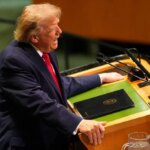
Regarding the nuclear aspect, information indicates that Iran will pledge not to seek to possess a nuclear weapon, and to work to address the crisis of enriched uranium and its stockpiles within a negotiating framework subject to international oversight. US President Donald Trump also agreed, according to sources, to discuss an option to reduce the rate of uranium enrichment inside Iran under the supervision of United Nations inspectors, as one of the solutions proposed to address this issue.
On the other hand, the memorandum stipulates a gradual easing of the sanctions imposed on Iran, but the implementation of this step will be linked to the extent of Tehran’s commitment to the terms of the agreement and the mechanisms for verifying the implementation of its pledges, without setting a fixed timetable for lifting the sanctions.
American sources revealed that Washington, Tehran and Qatar discussed a mechanism that would allow Iran to use part of its funds frozen abroad to purchase humanitarian goods, as part of confidence-building measures between the two parties.
According to Axios, Qatar played a pivotal role in formulating the initial agreement, as the Qatari mediator conducted direct and extensive contacts with the American envoy Steve Witkoff and Jared Kushner, in addition to the Iranian Foreign Minister, which contributed to bringing viewpoints closer together during the final stage of the negotiations.
In an indication that the signing is approaching, informed sources reported that four American planes loaded with logistical equipment for US Vice President J.D. Vance took off for Europe, in preparation for possible participation in the agreement signing ceremony.
The information also indicated that Israeli Prime Minister Benjamin Netanyahu had made contact during the past few days with figures close to the Trump administration in an attempt to obtain additional details about the content of the ongoing understandings between Washington and Tehran.
This development comes after months of military escalation and regional tension, which included threats to close the Strait of Hormuz, exchange of strikes, and indirect confrontations in more than one arena. The agreement, if officially approved, also represents a strategic shift that may redraw balances in the region, especially since it addresses, for the first time, the nuclear files, sanctions, navigation security, and ceasefire within a single framework.
The reference to Lebanon is of particular importance, as its inclusion in the clause extending the ceasefire for a period of 60 days reflects the interconnectedness of the regional issues in the ongoing negotiations, and reinforces expectations that any broad American-Iranian understanding will have direct repercussions on the security and political situation in Lebanon and the region as a whole.