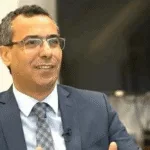
Member of the Loyalty to the Resistance Bloc, Representative Hassan Fadlallah, believed that any potential Iranian-American agreement would have direct repercussions on Lebanon, whether the Lebanese authority dealt with it positively or not, considering that Washington would not wait for the official Lebanese position because its calculations and interests, as he said, exist elsewhere.
Fadlallah said that the Americans are “exploiting and using some of those in power in Lebanon,” adding that Hezbollah has “full confidence in the Islamic Republic of Iran,” which he said has shown, during its confrontation with the Israeli escalation, that it is keen to include the Lebanese file within any possible understanding, without that meaning, as he put it, that it wants to replace the Lebanese state, but rather it calls on the state to benefit from this path and then complete the follow-up of files related to Lebanon.
Fadlallah stressed that Hezbollah’s priority remains confronting the Israeli attacks, but at the same time he stressed that this does not mean closing the political doors to solutions that could come through indirect negotiations, supported by the path being formed in the Islamabad negotiations, considering that this path constitutes an element of support for Lebanon and a factor of strength for it.
Fadlallah criticized the performance of the Lebanese authority, considering that some of those within it do not want to benefit from this path, but rather are trying to disrupt any opportunity to benefit from it. Addressing them, he said: “Benefit from this path, in other words, catch up with yourself,” adding that the path will continue “with them and without them.”
Fadlallah’s words came during the honoring ceremony held by Hezbollah for Ali Muhammad Kamal Saad, in the Ahl al-Bayt complex in the Al-Janaah area, in the presence of a member of the Loyalty to the Resistance Bloc, MP Amin Sheri, the families of the martyrs, and a group of people.
Fadlallah said that Hezbollah, in the face of what he described as an existential war targeting Lebanon, especially the south, sees no option but to continue confrontation, resistance and steadfastness, regardless of the pain, sacrifices and costs, considering that the other political options presented to Lebanon are based on “complete surrender and submission to Israel.”
He added that the cost of surrender, in his opinion, will be much greater than the cost of resistance, because resistance, according to him, is the way to liberate the land and return people to their villages in dignity, while surrender leads to the loss of the south, the continuation of Israeli control over the land, and leaving Lebanon’s security in Israel’s hands.
Fadlallah stressed that whoever wants to surrender from within the authority “should go alone,” stressing that Hezbollah will not allow the country to be dragged into this option, and he said that surrender is not included in the party’s dictionary.
Fadlallah criticized what he described as a political administration that made one concession after another at the expense and interest of Lebanon, noting that Hezbollah was not presented with any negotiable or applicable political option. He added that the party’s current choice is steadfastness, steadfastness, and sacrifice, considering that the blood of the martyrs is a trust that the party will not allow to be lost or touched, because the party is committed, as he said, to the right of the Lebanese to live in dignity, and to preventing Israel from continuing to target youth and towns.
He considered that the proposals related to the ceasefire did not provide a real solution, but rather were conditional on what he described as worse than war, noting that some of the formulas included removing Hezbollah from the south of the Litani, in addition to granting Israel the right to strike Beirut in the event of bombing the north. He said that the party informed those who reviewed it in authority that such formulas were unacceptable, asking how it was possible to accept a proposal that would lead to the evacuation of the people of Lebanon from their villages.
Fadlallah stressed that Hezbollah is not against diplomacy when it is based on force and right, and is carried out through indirect negotiations, but he renewed his rejection of direct negotiations, considering that they violate the law, the constitution, and the National Accord Document, and represent a regressive political path.
He said that those in power had previously announced that they would not negotiate in light of the continued firing, then they went to negotiation without a ceasefire. They also said that they would demand an unconditional ceasefire, but the conditions were placed on them and they accepted them, as he put it.
Fadlallah saw that the authority is negotiating matters that it cannot implement, because any results it reaches cannot be implemented without the approval of the resistance, stressing that the duo of Hezbollah and the Amal Movement reject formulas that, according to him, carry broad concessions to Israel and do not provide a realistic or real solution.
He stressed that the main battle today is confronting Israel, stressing that Hezbollah does not want to be drawn into side battles or internal rivalries, but at the same time he warned against taking the country into additional internal conflicts.
Fadlallah stopped at what he described as provocative, emotional, and irresponsible positions issued by some in power, criticizing those who consider people’s sacrifices and the blood of martyrs outside the law, or those who portray what is happening as a war between Iran and Israel on the land of Lebanon. He said that those who hold these positions do not acknowledge the existence of an attack on Lebanon, do not read into the history of Israeli ambitions, and do not place the South among their interests.
He added that those who adopt these approaches stand against the idea of resistance and sacrifice for the sake of the homeland and dignity, considering that such claims only benefit Israel. He saw that some of those in power do not act as those responsible for all of Lebanon, but rather with a factional, sectarian, sectarian, or regional logic, and they only see attacks as related to this or that region, stressing that they are in a position of authority, but they are not, according to him, in a position of national responsibility.
Fadlallah concluded by stressing Lebanon’s need for “statesmen” who implement the constitution, charter, and laws and care for all people, expressing his regret at the absence of this level of national responsibility. He said that every position that serves Israel is against the constitution, the law, the charter, and the country, and every position that harms the sacrifices is rejected and condemned, from wherever it comes from, stressing that Hezbollah’s preoccupation with confronting Israel does not mean allowing anyone to infringe on the dignity and rights of its audience.
Fadlallah’s positions come at a very sensitive political and security moment, as the escalation in the south intersects with the regional and international diplomatic movement around a ceasefire and post-confrontation arrangements. In this context, Hezbollah is trying to establish an equation that any settlement related to the South, its weapons, or its deployment cannot pass without its approval, while the Lebanese authority seeks to search for a political way out that reduces military and humanitarian pressure, amid a wide internal division over the limits of negotiation, the role of the state, and the position of resistance in any future settlement.
Fadlallah’s words also reflect Hezbollah’s link between the Lebanese track and the broader regional track, especially any potential understanding between Iran and the United States. The party believes that the regional balance of power could constitute an opportunity for Lebanon if the state uses it well, while other Lebanese parties fear that including Lebanon within regional understandings will reduce the margin of national decision-making or link the Lebanese file to external accounts larger than Beirut’s ability to control.
The South Complex remains at the heart of the crisis, as military, security, and sovereignty considerations intersect with the issue of the return of residents to border villages, the deployment of the army, the role of international forces, and the future of Resolution 1701. Between calls for indirect negotiations, the rejection of concessions, and Hezbollah’s adherence to the resistance equation, the next stage appears open to a careful test of Lebanon’s ability to transform regional pressures into political gains, or slide further into a long confrontation that exhausts the interior and increases the division over the state’s major options.