Less than 24 hours after the end of the last round of confrontation between Iran and Israel, Israeli security estimates began to talk about a new phase called “repeating rounds,” at a time when Lebanon returned to the forefront of Israeli military attention amid assurances of the continuation of operations in the south and the possibility of expanding them later.
According to a report by journalist Nitzan Shapira on the Israeli “N12” website, an Israeli security source confirmed that the security establishment does not believe that the recent confrontation with Iran will be the last, stressing that the next round may not be imminent, but it remains a matter of time.
The source said: “The assessment is that the short exchange of fire with Iran yesterday is not the last round with the Ayatollah regime. We will face Iran many times in the future. As long as there is a regime that wants to destroy us, we must make sure that it does not have a nuclear weapon and that its missile development program is exposed to as much damage as possible.”
He added: “It can be estimated that we have entered the era of rounds with Iran. The current round may have ended, but it may be repeated again in the future, even if not necessarily in the near future.”
The report indicated that Iran was the first to launch missiles towards northern Israel on Sunday evening, following the Israeli raid that targeted Beirut. He considered that this constituted the implementation of previous Iranian threats, which confirmed that any targeting of Beirut would be met with the launching of missiles towards Israel.
On the other hand, Israel began carrying out attacks inside Iran during the night, targeting air defense systems and a petrochemical factory in the west and center of the country. Iran responded, according to the report, by launching additional batches of missiles towards Israel on Monday morning, before the fighting stopped following US President Donald Trump’s demand to stop the escalation, leading to Tehran and Tel Aviv entering into a ceasefire.
Despite the truce, the report pointed out that Iran announced that “any attack on Lebanon, even in the south of the country, will lead to fire on Israel from its side.”
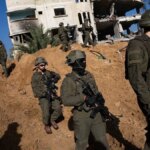
The report explained that after the Iranian threat, the Israeli army carried out a series of rapid raids on targets in southern Lebanon, in a direct message that Israel will continue to operate within Lebanese territory and that Iranian threats will not prevent it from doing so.
He added that the attention of the Israeli army, including the Intelligence Division and the Air Force, has returned to focus mainly on the Lebanese arena, which, according to the report, has returned to being the main center of fighting, with an intention to continue and expand military activity in southern Lebanon.
An Israeli military source was quoted as saying: “From now on, the test of proof in Lebanon falls on us. Iran’s threats do not deter us. We intend to continue working in southern Lebanon, and if we get the green light, we will also do so in Beirut.”
Regarding the negotiations with Iran, the report indicated the continuation of American statements supporting the negotiating track, despite the ambiguity surrounding the details of the progress achieved.
US Vice President J.D. Vance said: “The central goal of the United States is to ensure that Iran does not possess a nuclear weapon. Over the past year and a half, we have provided the necessary space that the president believes, and I think rightly, allows for a long-term settlement on the Iranian nuclear file.”
For his part, US President Donald Trump said: “We are in negotiations now, and they want to reach a very good agreement. They are ready to give us everything, and they are ready not to have a nuclear weapon. Within the next two weeks we will declare a complete victory. It will be a complete victory and it will happen very soon, and oil prices will fall.”
Between Israeli estimates that speak of an “age of rounds” with Iran, and messages exchanged across the Lebanese arena, the region appears to be facing a new phase whose title may be establishing different rules of engagement, while Lebanon remains at the heart of the most sensitive regional balances.