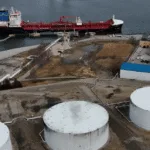
The newspaper quoted data from the “United Against Nuclear Iran” organization that about 39 tankers loaded with Iranian oil and petrochemical derivatives are currently stationed in the Gulf region, compared to 29 tankers before the start of the American blockade on April 13, with a noticeable accumulation near the Kharg Island oil port.
The data also monitored 13 additional tankers suspected of being linked to Iranian oil near the port of Chabahar in the Gulf of Oman, east of the Strait of Hormuz, within the indirect scope of US naval measures.
According to the report, these developments reflect the impact of escalating US restrictions, which aim to subject Iranian ships or those suspected of transporting Iranian oil to inspection or detention by the US Navy, as part of a policy aimed at reducing Tehran’s oil exports.
The Financial Times indicated that Iran, before the recent military escalation, was exporting between 40 and 60 million barrels per month, or about 2 percent of global supplies, through a fleet of old tankers subject to Western sanctions.
Tehran is facing an increasing oil crisis with the accumulation of large quantities of crude, in an attempt to avoid a complete halt to production under the pressure of the blockade.
In this context, Sanam Vakil, Director of the Middle East and North Africa Program at the Chatham House Center in London, said that Iran is seeking to avoid the worst scenario of a complete cessation of exports, as this will have a direct impact on its oil revenues. (toss)