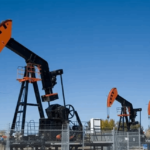
Bloomberg published a new report in which it said: The world is burning its oil reserves at the fastest pace ever recorded, while the Iran war is choking off crude supplies from the Gulf region, and rapidly consuming the reserve that protects the markets from shocks.
With these inventories declining at such a steep rate, the risk of skyrocketing prices, or even supply shortages, is closer than ever.
The report notes that two months after the near-closure of the Strait of Hormuz, governments and companies no longer have much margin to absorb any additional disruption.
Morgan Stanley estimates that global oil inventories fell by 4.8 million barrels per day between March 1 and April 25, a figure that exceeds the highest previous quarterly withdrawal rate in International Energy Agency data. Crude accounts for about 60% of this decrease, and the remainder is refined products.
Natasha Caneva, head of global commodities research at JPMorgan Chase, warns that the global oil system has an “operational floor” below which it cannot go, and that inventories act as a shock absorber, but not every barrel can be used.
Goldman Sachs noted that the pace of withdrawals has begun to slow slightly in recent days due to declining Chinese demand, but global visible inventories are already near their lowest levels since 2018.
Operational minimum
According to Bloomberg, inventories in Organization for Economic Co-operation and Development (OECD) countries are expected to reach “operational stress levels” in early June if the strait closure continues, and then to the “operational minimum” by September.
US crude inventories fell for the fourth week in a row, and diesel inventories reached their lowest level since 2005.
Although Asia is the most affected, stocks in China and South Korea are still relatively comfortable.
As for Japan and India, they reached their lowest seasonal levels in at least 10 years. Countries, such as: Indonesia, Vietnam, Pakistan and the Philippines, face the risk of reaching critical levels within just one month.
Governments have pledged to release 400 million barrels of emergency reserves, but the United States has so far released only about 79.7 million barrels, and the more is released, the less the “security cushion” for the world.
The CEO of Plains All American Pipeline warned that this pace of inventory withdrawal will continue for months, and after the end of the war may lead to a strong restocking wave. (Bloomberg – Erem News)