Hezbollah Political Council member, former Minister Mahmoud Qamati, escalated his tone towards Israel and the United States. He also directed direct criticism at the President of the Republic, General Joseph Aoun, and some Lebanese forces, warning against any direct negotiation path with Israel, and stressing that “the resistance will respond to every Israeli violation.”
In a speech he delivered during a celebration held by Hezbollah for the martyrs of the Islamic Resistance in the Third Sector who were martyred in defense of Lebanon and its people in the Battle of the “Devouring Storm,” in Husseiniyat al-Barjawi in Bir Hassan, Qamati considered that “Israel covets Lebanon’s land, sky, and waters,” adding that the “Greater Israel” project includes Lebanon, Syria, and other regions in the region, as he put it.
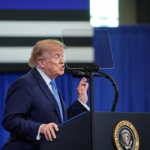
He said that this project “enjoys American support from Donald Trump and Thomas Barrack, in addition to some Arabs and, unfortunately, some Lebanese.”
Qamati pointed out that the conflict existing today is between “two visions,” the first of which considers that Israel “will not stop killing and expanding,” while the second vision bets on the possibility of reaching understandings and agreements with it.
He added that previous experiences, the most recent of which was the ceasefire agreement, showed that “Israel does not adhere to promises or agreements,” considering that its strategic project is based on “occupying and swallowing Lebanon.”
In a remarkable internal political escalation, Qamati criticized the President of the Republic, General Joseph Aoun, saying that the latter “wants to conduct direct negotiations with the Israeli enemy in light of the Lebanese division,” asking: “What right do you have to bypass a basic pillar of the state, which is Speaker of the House of Representatives, Nabih Berri?”
He added: “What right do you have to make a decision regarding the fate of Lebanon alone, and violate national unity, the constitution, pride, and the blood of the martyrs?”, considering that any direct negotiation may constitute “a service to America and Israel at the expense of national unity.”
Qamati called on the President of the Republic to adopt indirect negotiations “as happened in the past,” without recognizing Israel, saying that this allows maintaining the “national consensus.”
He also considered that “neither direct nor indirect negotiations will lead to results,” because Israel “will not withdraw except under the influence of the resistance’s rifle,” as he put it.
In another part of his speech, Qamati attacked Lebanese parties that he accused of siding with the United States and Israel against Iran, questioning the “neutrality” that some Lebanese political forces maintain.
He also criticized what he described as steps targeting Iran inside Lebanon, whether through positions related to the Iranian ambassador or through judicial lawsuits related to violating Lebanese sovereignty.
At the conclusion of his speech, Qamati stressed that Hezbollah is adhering to its plan and approach, stressing that “there is no security for Israel or the settlements in northern occupied Palestine as long as the security of Lebanon is not available.”
He added: “There is no return to what was before March 2, nor to strategic patience,” stressing that “every Israeli violation will be responded to by the resistance,” and that the party will continue what it described as “the path of complete liberation.”
Qamati’s words come at a time when Lebanon is witnessing a broad internal debate about the future of negotiations with Israel, and the role of “Hezbollah” and its weapons, coinciding with the escalation of international pressures related to the security situation in southern Lebanon and the indirect negotiations taking place under American sponsorship.