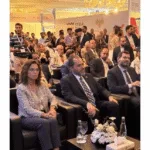
As part of the ongoing efforts to enhance the resilience and development of the agricultural sector, the Minister of Agriculture, Nizar Hani, held a series of high-level meetings with international and local bodies, centered around expanding horizons of cooperation, activating development support programs, and launching sustainable initiatives that respond to current challenges.
Minister Hani received a delegation from the Turkish Cooperation and Coordination Agency (TİKA), headed by its coordinator in Lebanon, Mr. Burak Burdakul, accompanied by Mr. Muhammad Maqsoud and Deputy Coordinator-General, Ms. Sarab, where ways to develop bilateral cooperation in the agricultural field were discussed.
During the meeting, the Minister gave an in-depth analytical presentation on the reality of the agricultural sector, especially in light of the challenges imposed by the recent aggression, reviewing the extent of the damage that affected agricultural production in the regions of the south and Baalbek, and the emergency intervention mechanisms adopted by the Ministry, including transporting livestock, beehives and seedlings from the affected areas, in addition to direct and indirect support programs that were implemented in cooperation with international partners and organizations, with the aim of protecting livelihoods and enhancing the ability of farmers to continue.
Minister Hani stressed the importance of building strategic partnerships with the Turkish side, given Türkiye’s advanced expertise in the agricultural and development fields, welcoming the expansion of areas of cooperation to serve common interests.
For his part, the head of the TİKA mission in Lebanon stressed the agency’s full readiness to support sustainable development projects in cooperation with the Ministry of Agriculture, in a way that enhances food security and rural development.
It was agreed to launch a preparatory process to conclude a comprehensive cooperation agreement between the two sides, which includes basic axes that include: exchanging technical expertise, training Lebanese cadres in Turkey, organizing specialized field visits, supporting and developing the nurseries of the Ministry of Agriculture, empowering rural communities, and enhancing participation in international agricultural exhibitions. It was also agreed to complete technical consultations during subsequent meetings to develop clear implementation mechanisms that ensure the sustainability and effectiveness of cooperation.
In a related context, Minister Hani received the President of ANERA in Lebanon, Ms. Samar Al-Yasser, in the presence of the organization’s work team, where the meeting discussed ways to enhance cooperation in humanitarian and development programs.
They discussed supporting shelter centers, expanding youth training programs and building their capacities, in addition to the possibility of implementing “work for cash” projects, which would contribute to providing income opportunities and achieving social stability in the most affected areas. The two parties also discussed the possibility of launching joint projects in a number of Lebanese regions, based on an integrated development approach that combines the humanitarian and productive dimensions.
It was agreed to study the preparation of an official cooperation agreement that would frame the relationship between the ministry and the organization, ensuring coordination of efforts, enhancing follow-up, and achieving sustainable impact of projects.
At the local level, Minister Hani met with MP Dr. Bilal Abdullah, in the presence of the Director General of the Siblin Laboratory, Mr. Adeeb Al-Hashem, and the Mayor of Siblin, Dr. Muhammad Shaaban, along with a specialized technical team.
The Minister began the meeting by emphasizing the pivotal role of the farmers’ registry as an essential regulatory tool for developing agricultural policies, stressing the Ministry’s commitment to supporting various initiatives that enhance production and sustainability.
The discussion centered on a group of development and environmental projects, most notably: establishing agricultural ponds to collect rainwater and enhancing water resource management, rehabilitating a green belt planted with carob and olive trees to form a windbreak and an environmental outlet, with the possibility of establishing a public park within it, in addition to rehabilitating quarry sites on an area estimated at 150,000 square metres, and rehabilitating five plots of land in the vicinity of the Siblin factory in order to repurpose them environmentally and productively.
Also, it was agreed to dispatch a team of technical experts from the Ministry of Agriculture to conduct the necessary studies and provide technical support, in addition to forming a joint follow-up committee to ensure the effective implementation of projects according to a sustainable vision.
These meetings confirm the strategic direction of the Ministry of Agriculture towards enhancing openness to international partnerships and activating cooperation with local authorities, which contributes to rebuilding the agricultural sector on more solid and sustainable foundations, enhances food security, and supports rural communities in facing economic and environmental challenges.