November 21, 2026

The Minister of Education and Higher Education, Dr. Rima Karami, announced, in an educational step implemented for the first time in the region, the adoption of an exceptional assessment that allows determining the academic level of children who have dropped out of education or are not enrolled in it, in preparation for integrating them into regular education or directing them towards vocational preparation. The initiative includes Lebanese students and displaced Syrians, and is part of government efforts to facilitate the return of the displaced to their country.
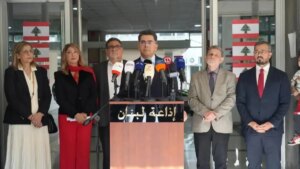
Karami’s announcement came during her inspection of the exceptional evaluation process at the Tariq al-Jadidah Third Public Intermediate School, to keep pace with the tests assigned to students enrolled in non-formal education, whether Lebanese who were not enrolled in education in the first place or dropped out of it, or displaced persons whose circumstances prevented them from entering schools. The Minister was accompanied on her tour by the Director General of Education, Fadi Yarak, the Head of the Educational District in Beirut, Muhammad al-Homsi, and the Head of the Official Examinations Department, Sahar Sarhan, in the presence of the representative of the European Union Embassy, Alessandra Vizier, and the Education Program Officer at UNICEF, Elena Morsli, heading a team from the organization’s office, and Nora Engdahl and Alaa Hamid, representatives of the Save the Children Association and the education sector, and they were received by the school director, Jamal Hammoud.
The visit began with a joint meeting to discuss the reality of non-formal education and the objectives of evaluation, before the Minister and the accompanying delegation visited a number of classes to see the students’ performance. In a media statement, Karami expressed her happiness with the implementation of the visit coinciding with Independence Day, considering exams as an essential reform step aimed at classifying the level of readiness of school-age children, and stressed that non-formal education has become part of the Ministry of Education’s responsibilities to ensure the right of every child to obtain a school seat, in line with Lebanon’s national and international obligations.
In the dimension related to the displaced, Karami revealed that the exceptional evaluation constitutes an opportunity to support the return of displaced Syrian students to their country, as they constitute the majority of the beneficiaries, as part of the return strategy that is being worked on in coordination between the relevant ministries. She announced an agreement made during her recent visit to Syria, according to which the results of these exams would be used as a reference for determining the appropriate grades for children in Syrian regular education, which would facilitate their reception and translate the return strategy into reality.
On the institutional and financial level, Karami explained that international funding allocated for relief was also used to strengthen the institutional capabilities of the Ministry and the Examinations Department, making them more prepared to receive Lebanese children who dropped out and organize an accurate database of their numbers and needs, to build a bridge that returns them to the path of formal education.
For his part, the Director General of Education, Fadi Yarak, considered that the evaluation allows us to know the achievement levels of students enrolled in non-formal education, pointing out that it is organized in cooperation between the Examinations Department and partner agencies to determine the students’ abilities and desire to enroll in formal education. He stressed that the results will also contribute to verifying the work of associations working in the field and monitoring their performance, concluding by emphasizing the implementation of the evaluation in partnership with UNICEF and international donors to provide a better academic opportunity for displaced students.