November 21, 2026

Inside the black rooms, complex scenarios are drawn about the expected war on Iran. But on the ground, the situation is summed up by the equation: “Your place is gone.” Between the two extremes, Lebanon is still a hostage waiting between the possibility of an expanded war or remaining an arena for settling scores. Will the war break out or will it remain merely a process of back-and-forth?
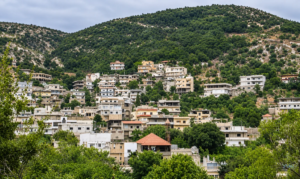
Two days ago, Israeli raids targeted the barren lands of the eastern chain in the Bekaa, specifically the areas of Shaara, Janta, and the Nabi Sheet Heights, and talk began about a new phase of Israeli escalation, whose implications go beyond the borders of the southern front, and re-raise the possibilities of the confrontation moving to a broader geographical scope.
According to sources following the developments of events in the south, the importance of these raids lies in the fact that they come three days after the Israeli army announced the targeting of an arms shipment near Jinta, which was said to be coming from Syria and directed to a Hezbollah center. Accordingly, the repetition of strikes on the same region within a short period reinforces the hypothesis that there is an Israeli focus on the party’s military structure in the Bekaa, especially facilities related to missiles, weapons stores, and supply lines across the Lebanese-Syrian border.
While the sources confirm that the war on Lebanon will be decisive this round with the aim of implementing what the Lebanese state was unable to do, which means withdrawing Hezbollah’s weapons, they indicate, according to a reading of the military backgrounds and field data, that Israel is working to expand the scope of its targets from the south to the deep east, within the framework of a declared policy to prevent “Hezbollah” from rebuilding its military capabilities. This is what the Israeli army justified the bombing of Hezbollah facilities in the Bekaa two days ago, which it considers part of its military system, in addition to the sites it had previously bombed during the recent confrontation.
So far, there are no announced data that confirm the existence of a decision for a comprehensive military operation. “However, what raises concern is the recurrence of the strikes and the expansion of their geographical area, in parallel with Israeli reports of preparations for the possibility of renewed confrontation with Iran,” the sources added.
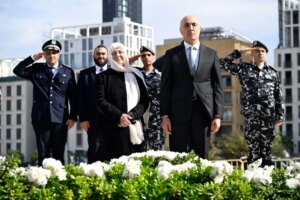
In this context, it indicates the existence of additional Israeli military preparations, including training and raising the readiness of the Home Front Command and hospitals, in anticipation of possible escalation. These field facts place the Lebanese state before additional challenges. The words of the Army Commander, General Rudolph Heikal, in today’s order that he addressed to the soldiers on the occasion of Independence Day, were clear, as he warned that the Israeli attacks and the destruction of villages impede the return of residents to their lands, stressing that restoring sovereignty over the entire Lebanese territory and extending state authority constitute a national priority.
In short, Lebanon is facing a very dangerous equation, as Israel continues to impose realities on the ground by fire, while the state still faces difficulty in consolidating its authority and monopolizing the decision of war and peace.
Regarding the Bekaa raids, the sources conclude that they do not constitute an inevitable prelude to a comprehensive war, but they are certainly an indication that Israel is now looking at its military and geographical expansion from the southern border all the way to the Bekaa and the Syrian borders. This equation makes the possibilities of escalation open, and places Lebanon facing a delicate stage in which Israeli calculations overlap with developments in the regional confrontation.
From Lebanon to Yemen, all the way to targeting the Saudi interior, it seems clear that the confrontation has moved to a more extensive and dangerous level. Diplomatic sources told Al Markazia that the Israeli escalation in Lebanon is no longer separated from the accelerating military developments in the region, especially the renewed confrontation between the Houthis and Saudi-backed forces, coinciding with the launching of missiles and drones towards Riyadh and other Saudi regions.
Therefore, the danger facing Lebanon is not limited to the possibility of launching a large-scale military operation, but also lies in the continuation of attrition, the expansion of strikes, and the imposition of new field realities, in light of the fragility of the existing understandings. Between Israeli calculations and regional tensions, Lebanon remains facing a fundamental test: Can the state restore its security decision and prevent the use of its lands as an arena for settling scores, or does its fate remain linked to negotiating paths and wars that exceed its ability to control?
The sources add: “Lebanon is facing a stage open to very dangerous possibilities, as there are no military facts that will resolve the outbreak of war, and there does not seem to be an atmosphere of calm that can be maintained. The Israeli escalation moving between the south, the Bekaa, and the barren lands of the eastern chain, in conjunction with regional military tensions, especially on the line between Yemen and Saudi Arabia, raises the possibility that the region is facing a broad rearrangement of the balance of power, beyond the boundaries of the separate fronts.”
But will Lebanon remain in a cycle of attrition and calculated strikes, or has a big explosion become a real possibility?
Here the seriousness of the stage emerges, as the continued ambiguity in the American and Iranian paths, and the multiplicity of battlefields, make any development on the ground susceptible to changing the rules of confrontation. Between a postponed war and a settlement that has not yet matured, Lebanon remains the most fragile link, especially since the country still faces the challenge of restoring the decision to war and peace. Postponing is not a guarantee of calm, and it may merely be a truce that precedes a bigger explosion,” the diplomatic sources conclude.