November 20, 2026

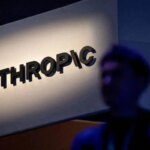
Anthropic, developer of the artificial intelligence program Claude, entered Wall Street in the largest initial public offering in history. Its stock rose on its first day of trading on the Nasdaq Stock Exchange, Thursday, November 20, 2026, by about 17% compared to the subscription price, after it opened trading with a jump of about 34%. The company ended the session with a market value of about 1.8 trillion dollars, after touching levels of nearly two trillion dollars during trading, based on a valuation of about 1.5 trillion dollars, thus becoming the seventh largest American company in terms of market value.
According to press reports, including a report by journalist Lior Bacalo on the “N12” website, the gains from the offering extended to include the company’s founders and employees. “Anthropic” was founded in 2021 by seven former employees of “OpenAI” who left it due to disagreements over the security of artificial intelligence, and is led by the two brothers Dario Amudi (CEO) and Daniela Amudi (president of the company). With the close of the first trading session, the value of each founder’s shares amounted to more than 21 One billion dollars, while thousands of employees became millionaires, as the value of shares per employee averaged more than $40 million, and the shares of more than 400 employees exceeded $100 million each, according to CNBC data.
On the other hand, the IPO prospectus raised concerns about huge future financial commitments to purchase computing capabilities approaching $900 billion. In an interview with CNBC, CEO Dario Amodei downplayed these concerns, stressing that cash flow and annual revenues make these commitments acceptable, reiterating his company’s commitment to balancing the speed of innovation and controlling safety risks. On the other hand, Wall Street witnessed sharp declines on the same day, as analysts in the “Wall Street Journal” suggested that investors would resort to selling shares of other companies to provide the necessary liquidity to buy “Anthropic” shares, while the “Nasdaq” area witnessed protests from demonstrators opposed to the rapid development of artificial intelligence data centers.
The offering shed light on the “circular investments” network that connects Anthropic with technology giants. Amazon, Google, Microsoft, NVIDIA, and AMD invest in it, while at the same time selling it the equipment needed to run their models. Seven of the company’s suppliers pumped additional investments amounting to $26 billion during the IPO. As a result, Amazon’s share ($18 billion) rose to about $290 billion, and Google’s share ($33 billion) rose to about $165 billion. Israeli investors also achieved estimated profits, including the “Migdal Insurance and Finance” company, which achieved profits of about $560 million (1.9 billion shekels) against its investments amounting to $180 million, in addition to potential gains for companies such as “Clal Insurance” and the “Sound Ventures” fund linked to Guy Ouziri and Ashton Kutcher.
On the analytical level, experts were divided over the significance of this historic IPO. While some considered it an indication of investor confidence in the continued rise of the artificial intelligence sector, others, such as Joe Maher of Capital Economics, warned that the intensification of major IPOs resembles previous indicators that preceded recessions in 1999, 2007, and 2021. Analysts recalled historical experiences of major companies such as “Facebook,” “Uber,” “Rivian,” and “SpaceX,” stressing that enthusiasm on the first day does not necessarily guarantee stock stability in the medium or long term. Thus, Anthropic stands before a real test to transform its billion-dollar valuations and enormous commitments into sustainable growth, amid widespread anticipation of the path of the sector as a whole.