November 16, 2026

Despite US President Donald Trump’s announcement of the end of military operations, accumulated political and field indicators show that the region has not entered a phase of stability, but rather is living in a state of “no war and no peace” that may be a prelude to a new round of confrontations or a broader regional war.
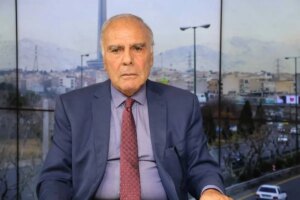
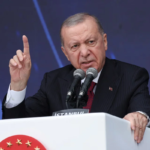
In this context, writer and political analyst Ali Hamadeh explains that Trump took a diplomatic decision to withdraw the Iranian negotiations file from Vice President Guy DeVance – who has been in charge since last March – asking him to focus on internal files. The most prominent is Trump’s assertion that there is no need for any negotiations with Tehran, considering that Washington achieved its goals, and that the blockade imposed on Iranian ports succeeded in stopping oil exports, in conjunction with the restoration of Gulf supplies to their previous levels and the decline in prices despite the military tension.
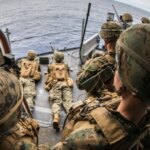
However, the reality on the ground contradicts the rhetoric of calm. The American military buildup continues until the aircraft carrier “Theodore Roosevelt” enters the area of operations of Central Command and the Fifth Fleet to join the carriers “George Bush” and “George Washington,” which reflects that the military option remains strongly on the table. In parallel, American strikes continue against Iranian sites on Qeshm Island and around the Strait of Hormuz, targeting radars and missile platforms, at a time when Iran announced targeting an American radar in Bahrain, in an exchange of strikes within a framework that has not yet reached a comprehensive confrontation.
Hamadeh warns of the most dangerous development represented by the escalation of Iranian threats towards Europe, and talk of increasing the range of ballistic missiles to four thousand kilometers to include major capitals such as Paris, London, Rome, and Berlin, in addition to claims of missile capabilities that may reach American territory – claims that need to be verified, but they reflect a remarkable escalation in Iranian rhetoric.
At the regional level, the fronts remain open. Starting with the continuation of the Houthi attacks with marches and ballistic missiles on Saudi Arabia at a lesser rate, leading to the intensification of security and military coordination between Washington and Tel Aviv. This period witnessed increased contacts between Benjamin Trump, Netanyahu, and Secretary of State Marco Rubio, in addition to intelligence and military consultations, and the visit of Mossad chief Roman Goffman to Washington and his meetings with prominent officials.
In the context of security concerns, circulating information indicates a possible Iranian plan to target Trump and senior officials in his administration through sleeper cells inside the United States, which prompted the authorities to tighten security measures and reduce the president’s public appearance. In Israel, a political development emerged, represented by a meeting between Benjamin Netanyahu and Gadi Eisenkot after a long break, devoted to discussing a security briefing on Iran and the region in light of the possibility of the outbreak of war that would require unifying the internal front.
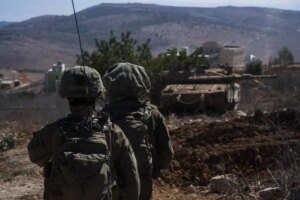
Regarding the Lebanese issue, Israeli military indicators show advanced preparations and extensive mobilization that places the Lebanese front at the top of priorities alongside Iran, carrying a clear message that any military intervention by Hezbollah in the upcoming confrontation will lead to a wide-scale war affecting all of Lebanon.
Hamadeh concludes that the region is facing an extremely dangerous phase. While Trump announces the end of the war, American mobilizations, Israeli coordination, and security and field preparations confirm that military options are still strongly present. Between the economic blockade and mutual threats, the fundamental question arises about whether the region is facing a settlement imposed by the balance of power, or a temporary calm that precedes a regional explosion in which Lebanon will be one of the most prominent theaters.