November 2, 2026

The contraction of the Lebanese economy by 6.4% shows the depth of the structural crisis that the country is suffering from, in light of the absence of fundamental reforms, the continuing state of political, security and financial uncertainty, and the decline in confidence in institutions and the banking sector.
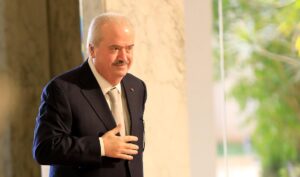
In this context, the President of the International Lebanese Entrepreneurs Association (MIDEL) and the Dean of the Faculty of Business Administration at Saint Joseph University (USJ), Dr. Fouad Zmkhal, confirmed in an interview with the “Lebanon 24” website that the repercussions of this contraction go beyond the decline in domestic product to affect consumption, investment, production, job opportunities, and purchasing power, which weakens the economy’s ability to absorb additional shocks after years of accumulated crises.
Zumkhal explained that the seriousness of the situation lies in the fact that deflation coincides with a rise in prices, the cost of living, and production, which raises the risk of stagflation. He pointed out that enterprises, especially small and medium-sized ones, face rising energy, transportation, and employment costs in parallel with declining demand and weak financing, while families are suffering under the weight of limited incomes and increasing expenses. This leads to the formation of a vicious circle that begins with a decline in purchasing power and a decline in consumption, causing institutions’ revenues to decline and being forced to reduce their investments and employees, leading to a further decline in purchasing power.
Despite this, Zumkhal pointed out that the private sector has demonstrated the ability to withstand and adapt, stressing at the same time that steadfastness does not represent a substitute for effective economic policies. He explained that sustainable growth is not achieved through individual initiatives, external transfers, and cash consumption alone, but rather requires productive investments, an effective banking sector, reliable public institutions, modern infrastructure, an independent judiciary, and a stable legislative environment. Warning that the absence of these components threatens to increase the rates of closure of institutions, the migration of talent, and the transfer of capital to more stable markets, which harms future growth opportunities and not only current activity.
Zumkhal stressed that the current crisis is a crisis of confidence and not just a liquidity crisis, and therefore pumping money, increasing public spending, or imposing additional fees and taxes are not enough to stimulate the economy. Local and foreign investors need stability, transparency, and protection of their rights. These conditions require addressing the banking sector crisis, restructuring public finances, strengthening the independence of the judiciary, combating corruption, and establishing fair rules for investment and competition. He also warned that imposing new tax burdens on productive institutions and citizens without reforming public spending and improving services may deepen the contraction instead of containing it.
Zumkhal called for moving from the stage of daily crisis management to formulating a national economic vision based on stimulating investment and production, supporting small and medium enterprises, developing the digital economy, promoting exports, and benefiting from the energies of the spread Lebanese, in addition to establishing an effective partnership between the public and private sectors based on accountability and transparency. Stressing that Lebanon does not lack competencies and opportunities, but rather stability, confidence, and reform decisions capable of transforming its potential into sustainable growth.
Zumkhal concluded by warning of the greatest danger represented by deflation, poverty, the closure of institutions, and the migration of young people into a familiar reality, through which the economy gradually loses its productive capacity, its human capital, and its competitive position. The economic contraction of 6.4% becomes an alarm bell calling for serious action and the political and economic will to launch reforms and restore confidence, instead of just managing the decline, which makes recovery more difficult and costly over time.