October 27, 2026

On Tuesday, Israeli forces and settlers escalated their attacks in various areas of the West Bank, including demolitions of homes and facilities, arrests, and direct attacks on citizens and their property, in conjunction with imposing severe restrictions on the olive harvest season and depriving people of access to their lands.
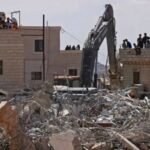
In the city of Qalqilya, Israeli forces stormed the Al-Naqar neighborhood and demolished a house belonging to the Shehab family. The circumstances of this demolition have not yet become clear, while tear gas bombs were fired on Al-Malaab Street. These raids coincided with raids that targeted several homes, some of which were converted into military barracks, where four residents of one of the homes were detained and their phones were confiscated. In Nablus Governorate, forces demolished three memorials in several villages, while pushing military reinforcements towards west Hebron.
In the same field context, settlers launched separate attacks that included burning vehicles and assaulting Palestinian homes. In the Al-Arma area near Beita, south of Nablus, settlers fired live bullets and wounded a young man after trying to run him over. In northern Ramallah, a settler released his livestock into people’s lands, while Israeli forces prevented residents from picking olives in the village of Barta’a, north of Jenin, and in the town of Turmus Ayya, north of Ramallah.
In Masafer Yatta, south of Hebron, occupation soldiers beat the citizen Issa and his son Rami and arrested them, following an attack by settlers on their residence and assault on their family members. These developments come at the height of the olive harvest season, amid increasing complaints from farmers about being prevented from accessing their fields and stealing their crops, and human rights organizations documenting repeated attacks in light of the expansion of settlement outposts.
Demolitions are not limited to homes only, but also include agricultural and commercial facilities and water facilities. According to the United Nations Office for the Coordination of Humanitarian Affairs, these operations are being carried out in Area C and East Jerusalem under the pretext of building without a permit – permits that are almost impossible for Palestinians to obtain – resulting in the displacement of families and the loss of their sources of livelihood.
These field measures coincide with efforts led by Israeli Finance Minister Bezalel Smotrich to expand settlement and consolidate control over the West Bank lands. In this context, a report by the American “J Street” organization, issued in September, linked the demolition of homes, settler attacks, settlement expansion, and administrative changes, describing them as integrated tools to push the Palestinians towards leaving their lands and establishing actual annexation.
The organization indicated that the vision proposed by Smotrich aims to annex about 82% of the area of the West Bank, while confining the main Palestinian communities within separate enclaves isolated from Israeli sovereignty. Land registration procedures also raise widespread Palestinian fears of the seizure of vast areas, as a result of the requirement to prove ownership according to complex Israeli requirements, on pain of registering them as state property.
While Israel is promoting these measures under the guise of “regulating ownership,” internal Palestinians and human rights organizations warn against exploiting them to expand settlements, cut off geographic connectivity between cities and villages, and strengthen control over the land without declaring a comprehensive official annexation.