October 25, 2026

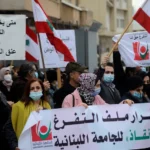
The Committee of Hourly Contracted Professors at the Lebanese University announced the suspension of its strike for one week, as a goodwill gesture and to pave the way for the concerned authorities to translate government promises into practical steps, with the academic interest and the stability of the academic year taking precedence.
The committee explained in a statement that it received with a cautious and responsible welcome the decision of the Council of Ministers issued on October 22, 2026, to divide the full-time file into four batches and determine the numbers of those eligible in each, in addition to raising the list of names of those eligible in the first three batches to be presented to the next session of the Council of Ministers in preparation for its official approval. It confirmed its daily follow-up to ensure the approval of these names, and to monitor the course of the fourth batch in compliance with the government deadline set until April 1, 2027.
The committee stressed that the suspension of the strike is temporary and accompanied by categorical firmness, warning that any hesitation or delay in completing the file and approving the names within the specified deadlines will necessitate an immediate return to the comprehensive strike, while holding the concerned authorities fully responsible for the repercussions.
Meanwhile, data on the sabbatical file revealed high coordination between the Minister of Education and Higher Education, Rima Karami, and the University President, Dr. Bassam Badran, in preparing payment regulations, contrary to what Badran previously leaked about the names being withheld from him and not being informed of them. According to the information, it was proven that Badran participated in preparing the regulations and consulted with official levels, at a time when Karami confirmed that the university president was the one who submitted the names and referred them, which contradicts his story that he was not aware of the content of the file.
The preparation of the payments came in the context of political and sectarian arrangements that accompanied the expansion of the number of full-time professors from about 1,300 to 1,680 professors to achieve a broader balance, with a directive to later raise the total number to 1,894 professors, amid reports stating that the goal is to serve the political leaders according to the sectarian system. These developments coincided with the reappointment of Badran as President of the Lebanese University, despite a formal objection expressed by Minister Karami within the Council of Ministers that did not disrupt the appointment.
These developments raise fundamental questions about the actual criteria that governed decision-making, and the reasons for the discrepancy between the declared positions and the hidden coordination that preceded the referral of the regulations, as well as legitimate questions about how to secure teaching hours for the new number, which has reached 1,894 professors, in light of fulfilling teaching quotas and not creating new specializations or branches that justify this increase.