October 23, 2026

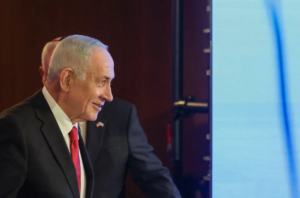
A hidden confrontation broke out between the political echelon and the Israeli military establishment five days before the elections, against the backdrop of the army’s persistent attempts to keep the bases and soldiers away from the electoral campaigns. However, the speeches delivered by Prime Minister Benjamin Netanyahu and Defense Minister Israel Katz during the officers’ graduation ceremony at the Pahad 1 base brought politics back to the heart of the military establishment, going beyond the strict directives previously set by the army.
A report by journalist Avi Ashkenazi, published by Maariv newspaper, revealed that the army conducted workshops in early August to adopt rules preventing the involvement of military personnel in the election campaign, and prohibiting soldiers and commanders from appearing in any photos or press releases of politicians. The army tried to implement this policy during Netanyahu and Katz’s visits to the recruitment base, and the graduation ceremonies for Hatzerim pilots and naval officers, in addition to receiving a submarine at the Haifa base, by reducing media coverage to a minimum.
However, the most sensitive test was represented by the “Pahad 1” ceremony yesterday, Wednesday, where the army sought to prevent the live broadcast of Netanyahu and Katz’s speeches, and stipulated that their contents be reviewed in advance to avoid turning the occasion into electoral propaganda. Despite this, most of the words were dominated by a political nature, especially Netanyahu’s statements regarding assigning the army to overthrow the Iranian regime and prevent its nuclear project.
These goals sparked widespread debate and criticism within the security services, which believed that the Prime Minister’s ambitions exceeded the actual capabilities of any army. While the army can weaken the Iranian regime and delay its nuclear program, it is unable to topple the regime or stop the project entirely without political or popular movements inside Iran.
In a related context, the state of tension was reflected at the political level. Defense Minister Yisrael Katz launched a sharp attack this morning on the leaders of the “Change Camp,” warning that “every possible attack on Israel on the eve of the elections will be registered in the name of Yair Lapid, Naftali Bennett, Yair Golan, and their comrades,” accusing the opposition of questioning security estimates. According to a reading of the report, Katz’s attack reflects a feeling of pressure, to avoid a direct confrontation with the Chief of Staff and the army that might cost the Likud Party valuable seats, which made him content himself with attacking the opposition leaders.
Katz’s attack sparked angry reactions from opposition leaders, led by Yashar Party leader Gadi Eisenkot, who described the Defense Minister’s statements as an “unprecedented decline” and “a prelude to disaster and a prior shift of responsibility.” Eisenkot added, “The leadership is corrupt and dangerous, and the survival of Netanyahu and Katz poses a threat to Israel’s security, and we will put an end to this at the ballot boxes after 5 days.”
Thus, the Israeli army’s efforts to neutralize the military establishment from the electoral conflict have turned into a comprehensive political and security crisis, not only limited to exploiting military platforms for propaganda, but also extending to the widening gap between declared political goals and actual military capabilities, especially in the Iranian file.