October 20, 2026

Sunni representatives escalated their objection to the Constitutional Council’s decision regarding the law reducing penalties, considering that it exceeded the limits of its powers and changed the purposes of the legislation approved by Parliament.
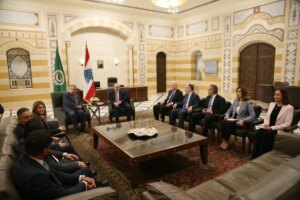
Following an extraordinary meeting, Representative Bilal Abdullah announced that the parliamentary meeting believed that its work had culminated in the approval of the law in the last parliamentary session under the auspices of the presidents, but he was forced to meet again due to the decision of the Constitutional Council.
Abdullah said: “The Constitutional Council, whose persons and positions we honor and respect, confiscated the legislative powers of the House of Representatives and tampered with this law according to political whims that have unfortunately become clear.”
He stressed that any political group submitting an appeal against the law constitutes “a democratic right for the representatives and the President of the Republic and must be respected,” rejecting, in return, some members of the Council resorting to “changing the intention of the legislator,” and what this represents as an infringement on the powers of Parliament.
He added: “We will not accept this, and there was a consensus among the colleagues present to reject this issue,” accusing the Constitutional Council of trying to circumvent the legislative achievement by “taking it from one side and placing it in another place.”
Abdullah criticized the expansion of the use of the term “binding interpretive reservations,” considering that the Council used it outside the framework of its powers and amended the articles and understandings reached throughout dozens of parliamentary sessions.
He stressed that the Council “disregarded the intention of the legislator,” and tried to undermine the basic purpose of the law, which is to “turn the page on targeting a political component in Lebanon” during the period of Syrian guardianship and its extensions in some aspects of the judiciary and security services, considering that the decision reflects the Council’s influence on the previous atmosphere, despite the renewed emphasis on respect for its members.
Regarding the upcoming escalatory steps, Abdullah announced that the meeting would place the file in the custody of Parliament Speaker Nabih Berri, in his capacity as “the person entrusted with the constitutional powers of Parliament” and the sponsor of the sanctions reduction law. He also indicated the representatives’ intention to meet with Prime Minister Nawaf Salam today, Monday, to present the issue, in addition to holding a meeting with the Cassation Public Prosecutor to discuss the issues raised.
Abdullah Balshaddad concluded by saying, “The most important step that must be expedited is to call on the House of Representatives to elect 5 new members of the Constitutional Council, and the government appoints 5 other members,” in order to form a council that “truly enjoys professionalism, professionalism, and impartiality.”