October 19, 2026

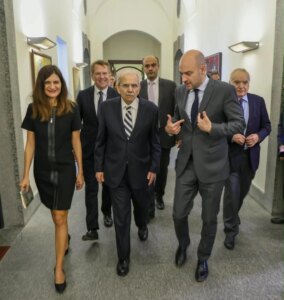
In light of the intensification of international tensions over Lebanon, political circles are awaiting the visit of the French Minister of Foreign Affairs, Jean-Noel Barrot, and whether it will succeed in restoring momentum to Paris’s political presence in a country that has long been an essential arena for its historical influence in the region. This visit comes amid questions about France’s ability to find a foothold in southern Lebanon, especially in light of the ongoing debate about the future of the UNIFIL forces, and the restrictions imposed by the American position on the margins of its movements.
In this context, the writer and political analyst, Sarkis Abu Zeid, in a statement to Lebanon Debate, considered that Minister Barrow’s visit falls within Paris’s efforts to restore its declining political role in Lebanon, pointing out the existence of what he described as an “American veto” that limits the French movement’s margin.
Abu Zeid explained that Paris is striving to consolidate its position based on its historical relations with Lebanon, and its keenness not to lose its influence easily, despite the regional and international obstacles it faces, most notably the American position.
He pointed out that France is trying to take advantage of the potential vacuum in southern Lebanon by putting forward several proposals to maintain an international role in the region, including continuing the missions of international forces or finding alternative formulas that include European forces and other arrangements. However, these proposals have not achieved any progress so far because they have not received American approval.
Abu Zeid pointed out that Paris is seeking to exploit the Lebanese crisis to find a practical role that will restore its presence, but the local forces supporting our branch do not seem capable of harassment in isolation from Washington or at the expense of the relationship with it.
He concluded by emphasizing that the President of the Republic, the government, and its president are considered closer to the United States compared to France, which constitutes a major obstacle to Paris’s ability to translate its diplomatic movements into actual political influence, in light of the broad American hegemony over the Lebanese scene.